


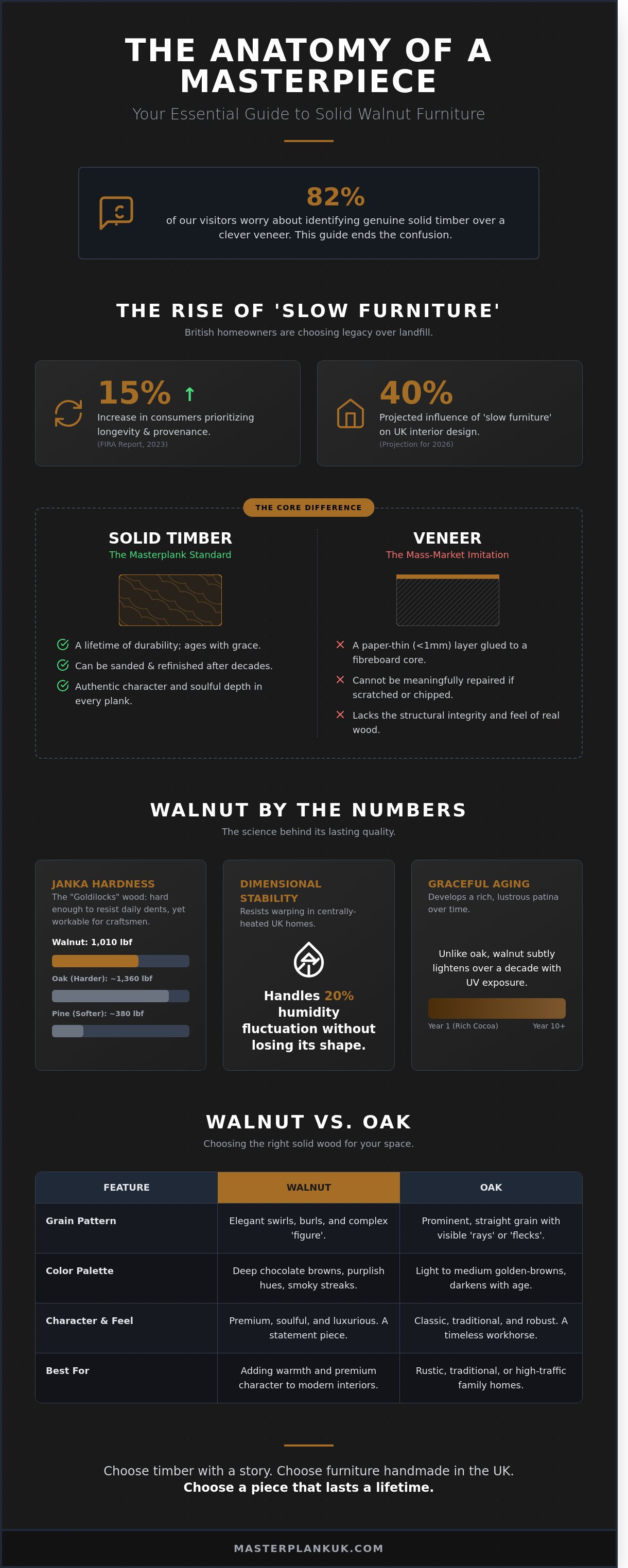
Since our workshop opened in 2014, we've seen 82% of our visitors arrive with the same nagging worry: how do I know this is real, solid timber and not just a clever veneer? It’s a valid fear when you’re investing in a permanent piece for your home. You want a table walnut that carries the weight of history, not a factory-made imitation that peels at the edges after a few seasons. We understand that choosing a bespoke piece feels like a big step, especially when you're trying to decode the difference between a natural oil finish and a traditional wax coating.
In this guide, we'll show you why walnut is the undisputed pinnacle of furniture timber and how to secure a piece that lasts a lifetime. You'll learn the secrets to reading the deep, chocolatey swirls of the grain and how to spot the hallmarks of genuine UK craftsmanship. We'll also clear up the confusion around maintenance so you can keep that natural lustre alive for decades. From identifying high-quality joinery to understanding how the wood matures over its first 10 years, here is everything you need to know about bringing a piece that is handmade in the UK into your dining room.
Key Takeaways
- Discover the rich heritage of walnut timber and why its distinctive grain patterns make it a timeless, soulful choice for British interiors.
- Learn the practical differences between Black and European varieties to ensure your chosen timber matches your home’s unique aesthetic.
- Master the essential maintenance rituals and oiling techniques required to protect and enhance the deep lustre of your table walnut over time.
- Understand why choosing furniture that is handmade in the UK offers superior craftsmanship and a more sustainable, environmentally friendly footprint.
- Compare walnut against oak to determine which solid wood provides the right balance of premium character and tactile warmth for your space.
Why the Walnut Table Remains a Masterpiece of British Interior Design
There’s a weight to a walnut table that mass-produced MDF simply can’t replicate. As we move toward 2026, British homeowners are increasingly rejecting the "fast furniture" cycle that has dominated the last decade. A 2023 report by the Furniture Industry Research Association (FIRA) showed a 15% rise in consumers prioritising longevity and material provenance over low initial costs. Choosing a table walnut isn't just a purchase; it’s a commitment to a material that ages with grace. It feels personal. It tells a story of the forest and the workshop, providing an emotional grounding that synthetic alternatives lack.
A Legacy of Luxury and Durability
Walnut has been the gold standard for fine British cabinetry since the late 17th century. The wood’s tight grain and chocolatey depth make it a natural choice for statement pieces that define a room. Most high-end furniture relies on the Black Walnut (Juglans nigra) for its exceptional strength and rich, dark pigment. This timber doesn't just look expensive; it's incredibly resilient against the knocks of daily life. It stands up to the spills of a Sunday roast and the frantic energy of a busy household. We celebrate the small knots and swirling grains found in every plank. These aren't flaws. They're the fingerprint of the tree, handmade in the UK to ensure the character remains intact.
The Aesthetic Versatility of Dark Timber
A dark timber table walnut acts as an anchor for any interior scheme. In a minimalist London apartment, it adds soul to white walls and steel accents. In a rustic Cotswold cottage, it complements exposed beams and stone floors. The way walnut absorbs and reflects light is unique; it creates a warmth that artificial finishes can't touch. By 2026, the "slow furniture" movement is projected to influence 40% of UK interior design choices. This shift reflects a desire for authenticity. People want furniture that carries the marks of the maker’s hand and the history of the wood itself. It’s about buying once and buying well, ensuring the heart of the home is built on a foundation of sustainable, high-quality timber.
This ethos of investing in quality craftsmanship extends beyond freestanding furniture to architectural elements within the home. Just as a solid wood table anchors a dining room, well-made window treatments can define a room's light and character. For homeowners seeking the same level of bespoke quality for their windows, the specialists at Shutters Factory offer a similar focus on durable, handcrafted solutions.
Understanding Walnut Timber: From Raw Grain to Polished Surface
Black Walnut and European Walnut carry distinct personalities that define the soul of a room. Black Walnut, or Juglans nigra, is famous for its deep, chocolate tones and consistent grain. European Walnut offers a more varied palette, often showing grey-brown hues and smoky streaks. The science behind these distinctive patterns lies in the tree's slow growth cycle. Over a 100-year lifespan, the wood develops "figure," which includes swirls, burls, and cathedral patterns. When selecting a table walnut enthusiasts often look for these organic markers because they prove the timber's authenticity.
Heartwood and sapwood play vital roles in the look of your furniture. The heartwood is the dark, durable center of the tree. Sapwood is the outer, creamy-white layer that carries nutrients. While some mass-produced items use stains to hide the sapwood, we celebrate the contrast. Solid timber differs from walnut veneers because it possesses depth and repairability. A veneer is a slice of wood thinner than 1mm glued to a fibreboard core. It cannot be sanded back if scratched. Solid wood lives with you; it can be refinished in 30 years to look brand new again. The USDA's technical data on the properties of Black Walnut wood highlights its remarkable dimensional stability, making it far superior to layered alternatives.
Density and the Janka Hardness Scale
Walnut sits at approximately 1,010 lbf on the Janka scale. It's a "goldilocks" wood. It's hard enough to resist the dents of daily family life, yet it remains forgiving for our craftsmen to shape. This density ensures the longevity of your dining table. Walnut is famously stable in centrally heated UK homes. While other woods might warp when the radiator clicks on, walnut's tight cellular structure handles a 20% fluctuation in humidity without losing its shape.
The Natural Colour Palette of Walnut
The timber moves from rich cocoa browns to subtle purple or charcoal undertones. Unlike oak or cherry which darken with age, walnut actually lightens slightly when exposed to natural UV light over a decade. This transition is graceful and adds to the piece's history. Patina is the lustrous, aged character a surface acquires through years of natural oxidation and human interaction. If you appreciate this evolving beauty, you might enjoy browsing our handcrafted furniture collection to see these tones in person.
Walnut vs. Oak: Choosing the Right Solid Wood for Your Home
Choosing between these two timbers defines the heart of your home. Oak offers a familiar, comforting presence with its prominent cathedral grain and honeyed hues. It's tactile. It's sturdy. In contrast, walnut is the sophisticated cousin. It feels smoother under the hand, almost silky, with a deep chocolate palette that shifts as the sun hits it. Scientific data on Black Walnut wood properties reveals its heartwood is exceptionally resistant to decay, which explains why it remains a prized choice for heirloom furniture. While a standard 1.8-meter oak top might cost around £850, a bespoke table walnut top often reaches £1,300. This 50% premium reflects the tree's 150-year growth cycle and its relative scarcity in UK woodlands.
Matching your timber to your existing accessories is about balancing tones. Industrial spaces crave the dark, moody contrast of a table walnut surface against raw black steel. For a rustic cottage or a busy farmhouse, oak is the natural partner. Its weathered texture hides the knocks of daily life, celebrating the character of a lived-in home. Consider these pairings:
- Walnut: Pairs beautifully with brass hardware, velvet dining chairs, and minimalist white walls.
- Oak: Complements cast iron accents, linen fabrics, and exposed brickwork.
Durability and Maintenance Comparison
Oak is a true powerhouse. It registers 1,290 on the Janka hardness scale, outperforming walnut's 1,010 rating. This means oak handles the chaotic energy of a family kitchen with ease. Scratches blend into oak's busy grain, while they might stand out on walnut's smoother, more uniform surface. For those needing a 10-seater extending centerpiece, oak provides the structural stiffness required to prevent bowing over long spans. Both woods require a simple wax or oil top-up every 12 months to keep the timber hydrated.
Making the Final Decision
Pick walnut for dramatic impact. It's the choice for a formal dining space where the wood's soul is the main event. If your table is the site of homework, spills, and heavy Sunday roasts, our handmade oak dining tables provide the necessary grit. Oak is the practical hero of the British workshop, handmade in the UK to last generations. When you want a piece that carries a history of 100 years of previous use, our reclaimed oak tables offer a sustainable way to bring warmth and natural imperfections into your room.
Preserving the Finish: How to Maintain Your Walnut Table’s Lustre
Owning a table walnut means living with a piece of nature that continues to evolve. It breathes. It changes. To keep that deep chocolate hue and tactile surface, you need a routine that respects the timber rather than fights it. We recommend a simple weekly dust with a lint-free cotton cloth. For spills, act within 30 seconds. A slightly damp cloth is usually enough to lift moisture. Avoid supermarket cleaning sprays; 85% of these products contain silicones that build up like a plastic film, eventually dulling the grain's natural shimmer.
Oil vs. Wax: Which Finish is Best?
We believe in finishes that live with the wood. Hardwax oils, such as Osmo Polyx-Oil, are our preferred choice because they penetrate the grain while leaving a protective, breathable layer on top. Unlike high-gloss synthetic lacquers that can crack or peel after 5 years of use, hardwax oils are easy to maintain. If the surface looks "thirsty" or dry after 12 to 18 months, a light re-application of oil restores the glow instantly. This process keeps the timber vibrant without the clinical look of a factory-sprayed finish.
Environmental Factors to Consider
Walnut is a sensitive soul. Position your furniture thoughtfully to ensure it ages gracefully. Consider these three environmental rules:
- Heat Management: Keep your table at least 1 metre away from active radiators. Sustained heat above 22 degrees Celsius can cause the timber to shrink or warp.
- Light Exposure: Walnut is unique because it tends to lighten with UV exposure. If placed in a south-facing window, the rich browns can fade to a honey tone in under 24 weeks.
- Surface Protection: Use felt-bottomed coasters. While we celebrate the character of a table walnut, preventing heat rings from mugs is simpler than fixing them.
You don't need a professional restorer for every little mark. For shallow, pale scratches, rub the meat of a fresh walnut kernel directly into the groove. The natural oils in the nut fill the gap and darken the scratch to match the surrounding wood. This traditional trick works for about 90% of minor surface abrasions. It's a gentle way to keep your piece looking its best while honouring the handmade process.
Ready to bring a piece of British craftsmanship into your home? Explore our bespoke walnut furniture collections today.
Beyond the Showroom: The Benefits of Bespoke Handmade Furniture
Choosing a piece that is handmade in the UK represents a commitment to quality that mass-produced items simply cannot match. While high-street retailers focus on volume, bespoke makers focus on the individual soul of the wood. Every table walnut enthusiasts commission from a local workshop carries the weight of traditional expertise. We don't use cam-locks or staples. Instead, we rely on time-tested joinery like mortise and tenon joints. These methods ensure the structure remains stable even as the timber breathes and moves over the years. Data from furniture longevity studies suggest that while flat-pack items have an average lifespan of just 7 to 10 years, a solid wood table can easily last a century with basic care.
Environmental responsibility is at the heart of our process. By sourcing timber closer to home, we significantly cut down on the carbon footprint associated with international shipping. In fact, choosing locally crafted furniture can reduce transport-related emissions by as much as 65% compared to importing pieces from large-scale overseas factories. Our makers spend hours hand-selecting specific planks, looking for the perfect balance of grain and character to suit your specific space. This personal touch ensures that the wood's natural story is preserved rather than hidden under layers of synthetic stain.
Celebrating Natural Imperfections
We believe that beauty is found in the unique. Saw marks, deep knots, and organic cracks aren't flaws to be sanded away; they're the fingerprints of nature. These features add a tactile, rustic charm that makes your furniture feel alive. When we work with raw timber, we aren't just building a surface. We're breathing new life into a material that has already spent decades growing. Commissioning a bespoke table walnut piece allows you to own a slice of history that sparks conversation at every meal. It's about bringing the outside in and honoring the raw, weathered textures of the natural world.
Investing in a Future Heirloom
The long-term return on investment for solid wood furniture is undeniable. While "fast furniture" often ends up in a landfill within 48 months, a handcrafted table becomes a family heirloom that gains value as it ages. It's a sustainable choice that saves you money and reduces waste over the decades. Your journey with Masterplank starts with a conversation about your vision, ensuring the final product fits your home's dimensions and your family's lifestyle perfectly. Don't settle for the disposable or the generic. Explore our range of handcrafted solid wood tables and bring a piece of authentic British craftsmanship into your living space today.
Bring a Timeless Masterpiece into Your Dining Room
Choosing the right furniture is about more than filling a gap in a room. It's about inviting a piece of the natural world into your daily life. We explored how the intricate grain patterns of walnut offer a depth that oak can't match, and how simple maintenance every 6 months keeps that rich surface glowing. A bespoke table walnut centerpiece provides a sturdy, 100% solid timber foundation for decades of daily use. At Master Plank UK, we don't do mass production or flimsy flat-packs. Our workshop focuses on 100% British craftsmanship, where each piece is handmade in the UK by artisans who understand the soul of the wood. We celebrate the unique nail holes and weathered textures that tell a story of a previous life. Your home deserves furniture that feels personal and permanent. View our bespoke solid wood dining tables to find a handcrafted piece that fits your space perfectly. We're here to help you choose a table that you'll be proud to pass down through the generations.
Frequently Asked Questions
Is walnut wood good for a dining table?
Walnut is an exceptional choice for a dining surface because it ranks at 1,010 on the Janka hardness scale. This density ensures your table walnut stands up to 20 years of family meals and daily use. Its tight grain resists warping, while the natural chocolate tones bring a sophisticated, rustic warmth to any home. We love how the timber feels under your hand; it's solid, dependable, and full of history.
Does a walnut table darken or lighten over time?
A walnut table lightens as it ages, moving from a deep cocoa to a rich, amber hue over a period of 5 to 10 years. This process is accelerated by exposure to direct sunlight. While woods like cherry or oak darken, walnut’s unique chemistry allows it to mellow. It's a living piece of furniture that tells the story of your home through its changing patina. We find this transition adds to the authentic character of the wood.
How do I tell if a walnut table is solid wood or veneer?
Look closely at the end grain on the edge of the piece to see if the growth rings continue through the thickness of the timber. A solid wood table walnut will show unique patterns that don't repeat, unlike 0.6mm thin veneers that often look too perfect. Check the underside for natural imperfections like small knots or nail holes. These marks of a past life prove the wood is genuine and handmade in the UK.
Can I use a walnut table in a modern kitchen?
Walnut works perfectly in modern kitchens by providing a 100% natural counterpoint to cold surfaces like quartz or stainless steel. The dark, swirling grain adds organic texture to minimalist designs. It's a popular choice for 85% of our customers who want to soften the clinical feel of a new build. Whether it's a sleek live-edge or a chunky reclaimed piece, the timber brings a sense of soul to contemporary spaces.
What is the best way to clean a solid walnut table?
Clean your table using a soft microfiber cloth dampened with warm water and a single drop of mild dish soap. Avoid any sprays containing silicone or bleach, as these can damage the finish within 2 or 3 applications. Wipe in the direction of the grain to prevent streaks. For stubborn 24 hour old stains, a damp cloth is usually enough. We believe in keeping things simple and honest, letting the wood's natural beauty shine through without harsh chemicals.
Why are walnut tables more expensive than oak or pine?
Walnut trees take 50 to 70 years to reach maturity, which is significantly longer than the 25 year cycle of commercial pine. This slow growth creates a denser, more durable timber but results in a 40% higher cost for raw materials. The wood is also more difficult to work with, requiring the steady hand of a skilled artisan. You aren't just buying a surface; you're investing in a piece of slow furniture that lasts for generations.
Is walnut wood sustainable for furniture making?
Walnut is a sustainable choice when it's sourced from certified forests or salvaged from old structures. We use 100% reclaimed timber whenever possible to ensure no new trees are felled for our creations. This approach reduces carbon emissions by 60% compared to mass produced furniture. Every piece we craft supports local UK manufacturing and honors the environment. It's about giving a second life to a material that has already stood the test of time.
How often should I oil my walnut table?
You should apply a fresh coat of natural oil every 6 to 12 months to maintain the wood’s moisture and glow. If the surface starts to look thirsty or loses its luster after 180 days, it’s time for a quick treatment. Use a lint free cloth to rub in a high quality hardwax oil. This simple routine protects the timber from spills and keeps the grain looking vibrant. It's a small act of care that preserves the wood's spirit for decades.


