


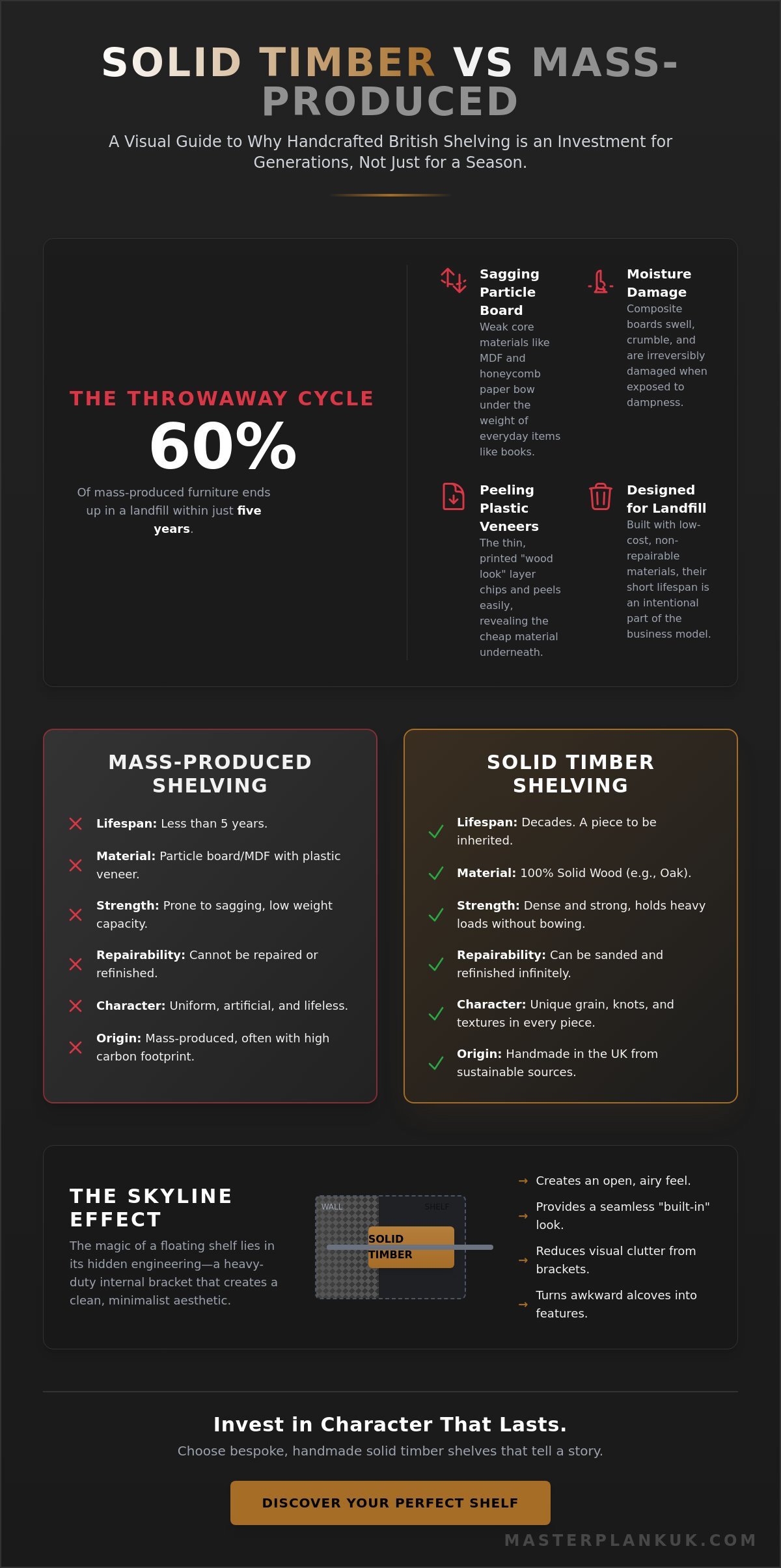
Most modern shelving is designed to be replaced rather than inherited. A 2023 industry report highlighted that nearly 60% of mass-produced furniture items end up in a landfill within just five years, often due to sagging particle board or peeling plastic veneers. You've likely experienced that sinking feeling when a supposedly sturdy unit begins to pull away from the wall under the weight of a few books. It's frustrating to settle for standard sizes that never quite fit your specific alcoves or match the authentic, weathered character of a British home.
We believe your walls deserve more than a temporary fix. In this guide, you'll discover how to choose and style high-quality shelves floating shelves that bring a genuine sense of history and warmth to your living space. We'll show you how to select and install bespoke, solid timber pieces that are handmade in the UK to ensure they remain a beautiful focal point for decades. From measuring for a perfect fit in a tricky corner to mastering the art of the rustic display, you're about to learn how to transform your storage into a lasting piece of craftsmanship.
Key Takeaways
- Learn why solid timber outlasts mass-produced alternatives, offering a durable surface that can be refinished and cherished for decades.
- Master the engineering behind invisible support systems to ensure your shelves floating shelves remain secure and level on any wall type.
- Discover how to measure for bespoke sizing to turn awkward alcoves and chimney breast recesses into seamless, built-in storage features.
- Understand how to achieve the minimalist "skyline" aesthetic while adding authentic rustic character to your home with handcrafted British timber.
- Explore the value of investing in "Handmade in the UK" craftsmanship where every saw mark and grain pattern tells a unique story.
Understanding the Appeal of Floating Shelves in Modern Homes
There is a quiet magic in a piece of thick timber that seems to hover against a wall without any visible means of support. These shelves floating shelves rely on a clever internal bracket system, drilled deep into the masonry or timber studs, to remain perfectly level and secure. This engineering creates what designers call a "skyline" effect. It is an aesthetic that opens up a room, making even the smallest UK terrace feel airy and expansive. If you have ever wondered What is a floating shelf?, it is essentially a marriage of heavy-duty hardware and artisanal woodwork designed to hide the "how" and highlight the "what."
In British homes, we have seen a massive shift over the last 15 years. Storage isn't just about hiding clutter anymore; it is about curation. By 2026, the trend has moved firmly toward using solid wood to ground a space. While mass-produced MDF alternatives exist, they lack the soul of natural timber. A solid wood shelf brings a piece of the forest indoors. It carries the weight of history, especially when crafted from reclaimed wood featuring original nail holes and weathered textures. This tactile quality turns a simple wall-mounted unit into a genuine focal point that feels permanent and intentional.
The Aesthetic Versatility of Floating Wood Shelving
Bespoke timber shelving fits almost any interior narrative. In a stark industrial loft in Manchester, a chunky, dark-waxed oak shelf adds much-needed warmth against cold brickwork. Conversely, in a Cotswold cottage, a lighter, natural grain helps maintain that traditional, lived-in feel. These shelves floating shelves break up large, empty wall expanses without the oppressive bulk of a floor-standing cabinet. There is a deep emotional response to natural grain. It feels honest. Each knot and crack tells a story that plastic laminates simply cannot replicate, providing a sensory connection to the natural world.
Floating Shelves vs. Traditional Bracketed Shelves
Traditional brackets have their place, but they often clutter the visual field. Floating units offer a "built-in" look that feels like part of the building's architecture rather than an afterthought. In minimalist kitchens, where every centimetre counts, they are often the only viable choice for keeping daily-use items within reach without sacrificing the clean lines of the design. Psychologically, removing the "visual noise" of external brackets helps a room feel more organised. Data from interior design surveys suggests that clutter-free horizontal lines can significantly reduce stress levels in small living environments. You get the storage you need, but the room stays calm, balanced, and breathable.
Choosing the Right Timber: Why Solid Wood Outlasts Mass-Produced Alternatives
Walking into a high-street furniture shop often feels like a gamble. You see a shelf that looks like wood, but it's actually just a thin veneer glued over honeycomb paper or MDF. These mass-produced items are built for the bin, not for the home. When you choose solid timber for your shelves floating shelves, you're investing in a material that has stood for decades and will last for many more. Unlike composite boards that swell and crumble if they get damp, solid wood is resilient. The solid wood properties found in natural timber allow it to be sanded back and refinished time and again, effectively resetting its lifespan every few years. It's a sustainable choice that avoids the "throwaway" cycle of modern retail.
Every piece of timber we use tells a story through its knots, grain patterns, and natural imperfections. We don't see a nail hole or a unique swirl in the grain as a flaw; we see it as a mark of authenticity. Choosing sustainably sourced, handcrafted British timber means you're supporting local woodlands and reducing the carbon footprint associated with international shipping. It's about bringing a piece of the natural world into your living space.
Solid Oak: The King of Hardwood Shelving
Oak is the undisputed heavyweight of the hardwood world. Its dense cellular structure makes it the ideal choice for holding heavy book collections or hefty kitchenware without bowing. Beyond its utility, oak brings a sense of prestige. It's a legacy material; whether you prefer the golden warmth of natural oils or the deep, moody tones of a dark weathered wax, oak takes finishes beautifully. It's a simple way to add long-term value to a British home, providing a sturdy foundation for your most prized possessions.
Rustic Pine: Warmth, Texture, and Chunky Design
If you're after that iconic "chunky" look, pine is your best friend. It's a softer wood, which means it takes on texture and character more readily than hardwoods. It's a cost-effective way to get the real wood feel without the hardwood price tag. Over time, pine develops a rich patina that reflects the life of your home. Every little knock or scratch becomes part of its story. It's warm, inviting, and feels alive in a way that plastic-coated chipboard never could. For those seeking a relaxed, farmhouse vibe, pine offers the perfect canvas.
The Artisan Difference: Handmade in the UK
There's a specific soul in a piece of timber that's been hand-planed by a master craftsman right here in the UK. We believe in slow furniture. This means every plank is inspected, every knot is celebrated, and every edge is finished with care. It's about quality control that an automated factory line simply can't match. You can feel the difference when you run your hand across the surface. Bespoke craftsmanship is the deliberate rejection of the one-size-fits-all flat-pack culture that prioritises speed over soul. If you're ready to move away from mass-produced furniture, you can explore our range of handcrafted timber to find your perfect match.
The Engineering of Invisible Support: Brackets, Weight, and Wall Types
Floating shelves often feel like a touch of joinery magic. There are no visible braces or bulky corbels to distract the eye, just the raw, weathered beauty of the timber. At Masterplank, we achieve this through precision engineering rather than illusion. We bore deep internal channels into the heart of the reclaimed wood, allowing the shelf to slide seamlessly over heavy-duty steel rods. These aren't flimsy shelf pins. They are solid steel brackets designed to bite deep into your wall, ensuring the unique grain of your shelves floating shelves remains the focal point of the room.
The common worry that a shelf might sag or fall usually comes down to the fixings rather than the wood itself. Our system distributes the load across the entire length of the internal bracket. A 45mm thick shelf provides the structural depth needed for heavier kitchen storage, while a slimmer 35mm profile works beautifully for lighter decorative items. This hidden strength allows the soul of the wood to shine without compromising on safety or durability. It's about finding that perfect balance between aesthetic lightness and physical strength.
Masonry vs. Plasterboard: What You Need to Know
Solid brick or stone walls provide the ultimate anchor. These surfaces allow expansion bolts to grip with incredible force, often supporting weights up to 35kg. Fitting to plasterboard requires more care. You must locate the vertical timber studs behind the board to ensure a secure fix. If your shelves floating shelves aren't aligned with a stud, high-performance hollow wall anchors are essential, though we always advise hitting the timber for maximum stability in any UK home.
Calculating Load Capacity and Weight Limits
Weight limits change based on the depth of the timber. A standard 200mm deep shelf on a masonry wall safely holds around 25kg. However, once a shelf exceeds 250mm in depth, the leverage on the bracket increases. For heavy items like a 7kg stand mixer or a collection of hardback books, we recommend our 66mm chunky timber. This thickness allows for larger diameter steel rods, providing the extra rigidity needed to prevent any forward tilt over time. Safety is our priority, and every piece is handmade in the UK to meet these rigorous standards.
Designing Your Space: Bespoke Sizes and Styling for Every Room
Every home has those tricky spots that defy standard furniture. A chimney breast recess or a narrow alcove often feels like wasted space because mass-produced options simply don't fit. That's where the beauty of bespoke sizing truly shines. Choosing shelves floating shelves tailored to your exact millimetre measurements creates a seamless, high-end look that feels like a permanent part of the architecture. It's about more than just storage; it's about reclaiming the character of your walls.
To achieve that coveted "wall-to-wall" built-in finish, accuracy is vital. Walls in British homes, especially older properties, are rarely perfectly straight. You should measure your space at three different points: the front, the middle, and the back of the recess. Use the smallest of these three measurements to ensure your timber plank slides into place without scuffing the paintwork. This precision transforms a simple piece of wood into a custom architectural feature.
The depth you choose dictates how the room functions. Consider these practical standards for different areas:
- Hallways: A shallow depth of 150mm provides a home for keys and mail without obstructing the walkway.
- Living Rooms: A standard 200mm depth is ideal for paperbacks and framed photos.
- Kitchens: A deeper 225mm to 250mm shelf is necessary to safely hold dinner plates and heavy cookbooks.
If you have a large, blank wall, don't feel restricted to a single long plank. Using varied lengths and staggering the heights creates a dynamic "gallery wall" effect. This breaks up the visual weight and allows you to display taller items like vases alongside smaller trinkets, adding a rhythmic flow to the room.
Kitchen Shelving: The Open-Plan Revolution
Heavy upper cabinets often make a kitchen feel cramped. Swapping them for solid wood planks opens up the room and lets the light bounce around. It's a practical shift for the busy home cook. Keeping your everyday stoneware, mugs, and glass jars within easy reach makes the morning routine smoother. For more inspiration on how to breathe life into your culinary space, check out our guide on Wall Shelving for bespoke storage ideas. These thick, rustic planks can easily support the weight of a full cast-iron collection while looking effortless.
Styling Your Rustic Shelves Like a Pro
Styling is where you tell your story. Use the "Rule of Three" by grouping objects in odd numbers to create a natural visual balance. Layering is key. Don't just line things up; place a small ceramic bowl in front of a leaning piece of art. Mix your textures by pairing the rugged, weathered grain of the timber with smooth glass or shiny metals. At night, the wood grain deserves to be the star. Small LED strips or well-placed downlights can highlight the unique saw marks and nail holes, making the history of the wood glow.
Investing in Character: The Masterplank UK Approach to Handmade Shelving
Mass production often feels clinical and hollow. It lacks the heart that only a craftsman's hand can provide. At Masterplank UK, we've consciously walked away from the "flat-pack" mentality to focus on bespoke quality that tells a story. When you choose our shelves floating shelves, you're not just adding a storage solution to your wall. You're reclaiming a piece of history. Every plank we select has lived a previous life; our job is to ensure its next chapter in your home is just as meaningful.
We're proud to say every single piece is handmade in the UK. We rely on traditional woodworking techniques that prioritise the integrity of the timber over the speed of the assembly line. This artisanal approach means no two shelves are ever identical. You'll see the history of the wood in every knot and grain pattern. We've simplified the ordering process so you can secure this level of craftsmanship without the headache. You can specify custom lengths to fit your exact alcove or wall space, ensuring a perfect fit every time.
Our Timber Selection and Finishing Process
We don't just look for wood; we look for soul. Our selection process involves scouring for timber that displays the most character. We actively seek out the features that big factories discard, such as weathered textures, unique saw marks, and original nail holes. These marks are the fingerprints of the wood's journey. To protect these features, we use a meticulous hand-waxing process. This doesn't just coat the wood; it sinks in to nourish the grain while highlighting its natural flaws rather than hiding them. You can learn more about how we treat our materials in our guide to Handcrafted Woodworking Shelves.
The Masterplank Guarantee: Durability and Support
Solid wood is a living, breathing material. It needs to be treated with respect, especially in the context of modern UK homes. Our shelving is designed to stand the test of time and the dry air of central heating, which can often cause lesser products to warp or crack. We build our shelves floating shelves to be robust and reliable. Our commitment to you doesn't end when the package arrives at your door. We provide direct access to expert advice for installation and ongoing timber care. We want your shelves to look as stunning in ten years as they do on the day you put them up. If you're ready to bring authentic British craftsmanship into your home, explore our full range of handcrafted floating shelves today.
Bring the Beauty of Solid Timber Into Your Home
Choosing the right wall storage is about more than just finding a spot for your ceramics; it's about investing in the soul of your living space. Mass-produced alternatives often rely on thin veneers that can begin to peel or sag within 12 to 24 months of use. By choosing solid oak or pine, you ensure your furniture remains a permanent, sturdy fixture for years to come. We've explored how the engineering of invisible brackets allows for a clean, minimalist look without compromising on weight capacity. Every piece is handmade in the UK by expert artisans who refuse to use MDF or cheap substitutes. We celebrate the natural cracks and unique grain patterns that give our shelves floating shelves their distinct, rustic personality. Because we offer bespoke sizes tailored to your specific home, you don't have to settle for standard measurements that don't quite fit your alcoves. You're choosing a piece of British heritage that's built with care and designed to endure for decades. It's time to transform your walls with a touch of authentic, sustainable craftsmanship.
Browse our collection of bespoke, handmade floating shelves
We look forward to helping you find the perfect piece of timber to complete your room.
Frequently Asked Questions
Can floating shelves hold heavy books?
Yes, our solid wood floating shelves can support a substantial weight of up to 30kg when fixed into solid masonry or directly into timber wall studs. We use heavy duty steel rods that provide the necessary leverage for a full row of hardbacks. For safety, you should distribute the weight evenly across the timber. If you're mounting to plasterboard without hitting studs, the capacity drops significantly to around 5kg or 10kg depending on the specific fixings used.
Can you put floating shelves on a plasterboard (stud) wall?
You can certainly install shelves floating shelves on a plasterboard wall, provided you secure the internal brackets into the vertical timber studs. Standard 12.5mm plasterboard isn't strong enough on its own to support the weight of solid oak or reclaimed pine. If the studs don't align with your desired position, specialized grip-it fixings can help, but they won't match the 35kg weight limit of a direct stud connection.
What is the best wood for floating shelves?
Solid oak and high quality reclaimed pine are the premier choices for longevity and character. Oak offers a dense grain that resists knocks, while our 100 year old reclaimed timber provides a unique history with every piece. We select timber with a moisture content below 10 percent to ensure the wood remains stable once it's inside your home. These materials provide a warmth that mass produced MDF simply can't replicate.
How do I stop my solid wood shelves from warping?
We prevent warping by kiln drying our timber to a specific 8 percent moisture level before it reaches our UK workshop. To maintain this stability at home, avoid installing your shelves directly above a high output radiator or in a damp, unventilated bathroom. Wood is a living material that breathes. Keeping your room at a consistent temperature between 18 and 21 degrees Celsius helps the fibers stay straight and true.
Do floating shelves come with the brackets included?
Every shelf we handcraft comes with the necessary concealed steel brackets and wall plugs included in the price. We use 12mm diameter heavy duty rods that slide into pre drilled holes in the back of the timber. This creates that clean, minimalist look where the wood appears to grow straight out of the wall. You won't need to go on a separate trip to the hardware store for basic fixings.
How thick should a floating shelf be to look "chunky"?
To achieve a truly chunky aesthetic, we recommend a thickness of at least 45mm to 50mm. This profile provides enough visual weight to showcase the natural grain and character marks of the reclaimed wood. Standard mass market shelves are often only 18mm thick, which can look thin and flimsy on a large wall. A 50mm slab of timber feels substantial and anchors the room with its rustic presence.
Can I install floating shelves myself or do I need a professional?
Most homeowners with a spirit level and a power drill can complete the installation in about 30 minutes. It's a straightforward process of marking the holes, drilling into the wall, and sliding the timber onto the rods. However, if you're dealing with old, crumbly Victorian brickwork, hiring a local tradesperson for an hour might be a wise investment. They'll ensure the fixings are perfectly level and secure.
How do I clean and maintain rustic wooden shelves?
Maintaining your shelves is simple; just use a dry, lint free cloth for weekly dusting to keep the grain clear. Every 6 to 12 months, you might want to apply a small amount of clear beeswax to nourish the wood and enhance its natural patina. Avoid using harsh chemical sprays or silicone based polishes. These can strip away the protective oils and dull the authentic character of the handcrafted finish.


