


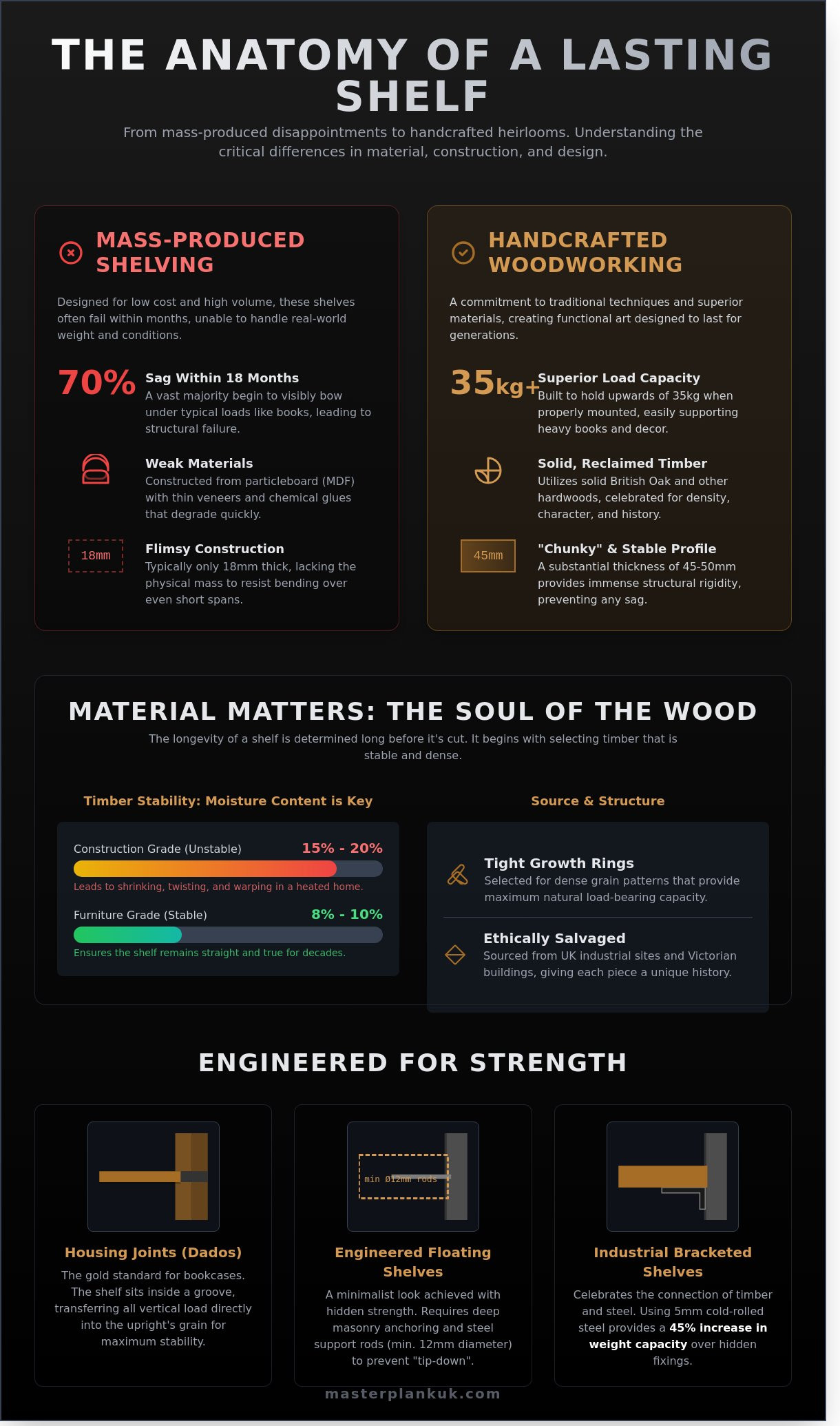
What if the shelf holding your most treasured books wasn't just a piece of storage, but a living piece of history designed to outlast the house itself? It's a frustrating reality that 70% of mass-produced units begin to sag within just 18 months of installation. We've all looked at a bowing £30 plank and felt that pang of disappointment. You deserve woodworking shelves that celebrate the raw character of the grain rather than hiding behind thin veneers and chemical glues.
I understand the worry that comes with choosing timber; the fear of warping near a radiator or getting lost in a maze of technical joinery terms is common. This guide promises to demystify the process, from selecting the right salvaged oak to mastering the joints that ensure a lifetime of durability. We'll walk through the essentials of timber stability and help you decide between the charm of a bespoke commission and the challenge of a weekend DIY build.
Key Takeaways
- Understand how traditional joinery techniques provide the mechanical advantage needed to prevent unsightly shelf sag and ensure lasting structural integrity.
- Learn to distinguish between wood species, discovering why solid British Oak remains the gold standard for density and enduring character.
- Master the essential physics of load-bearing and span limits to ensure your woodworking shelves are perfectly proportioned for their intended weight.
- Discover why choosing solid, reclaimed timber over mass-produced MDF or veneers adds a unique story and tactile soul to your home.
- Gain professional insights into the bespoke design process, allowing you to tailor dimensions to your specific alcoves for a seamless, handcrafted fit.
What Defines Professional Woodworking Shelves?
A true woodworking shelf is far more than a simple horizontal surface for storage. It represents a precise intersection of utility, structural engineering, and aesthetic character. While basic different types of shelving might serve a basic purpose, professional-grade work focuses on how the timber behaves over decades. In our workshop, we see every piece of wood as a living material that requires an understanding of moisture content and grain direction to prevent warping.
Choosing "handcrafted in the UK" signifies a commitment to traditional joinery that mass-produced imports simply cannot match. We distinguish between construction-grade lumber, often used for house frames, and furniture-grade timber. Construction timber usually has a moisture content of 15% to 20%, which leads to shrinking and twisting in a heated home. We ensure our woodworking shelves are seasoned or reclaimed to a stable 8% to 10% moisture level. This ensures they remain straight and true once they're mounted on your wall.
The Philosophy of Slow Furniture
Mass-produced flat-pack shelving typically fails the longevity test within 24 to 36 months, often bowing under the weight of a few heavy books. We embrace the "slow furniture" movement. This approach celebrates natural imperfections like knots, shakes, and original saw marks. There's a deep emotional value in owning a piece with a story. When you run your hand across a shelf made from 100-year-old salvaged joists, you're touching history. These aren't flaws; they're the soul of the wood.
This appreciation for historical craftsmanship is also why many turn to established dealers like Nicholas Wells Antiques, who curate furniture that has already stood the test of time.
Anatomy of a High-Quality Shelf
The strength of woodworking shelves depends heavily on the grain pattern. We select timber where the growth rings are tight, providing maximum load-bearing capacity. Thickness is equally vital. While standard retail shelves are often a flimsy 18mm, our "chunky" shelves typically measure 45mm to 50mm. This isn't just a style choice; it prevents sagging over long spans. We finish our work with hard-wearing oils or natural waxes. These treatments soak deep into the fibres rather than sitting on top like cheap plastic laminates, allowing the wood to breathe and age gracefully.
- Timber Source: Ethically salvaged from UK industrial sites and Victorian-era buildings.
- Durability: Built to hold upwards of 35kg when properly mounted into solid masonry.
- Finish: Hand-applied coats for a tactile, matte texture that highlights the natural grain.
Essential Joinery and Construction Techniques
A shelf that bows is a heartbreak in slow motion. When we craft woodworking shelves, we're fighting a constant battle against gravity and time. Professional joinery is the only way to win. It's the difference between a piece of furniture that lasts five years and one that serves your family for fifty. By using traditional wood-to-wood connections, we create a mechanical advantage where the timber itself bears the load, rather than relying solely on the shear strength of a screw or the brittle bond of modern adhesives.
Every joint must balance aesthetics with raw capacity. A 120cm shelf made from 40mm thick reclaimed pine can support upwards of 30kg if the joinery is sound. However, without proper housing, that same timber will show a visible deflection of 3mm or more within just six months of use. Hardware choice is equally vital. We don't just use any fixings; we select heavy-duty steel components that mirror the ruggedness of the timber they support. It's about ensuring the soul of the wood remains upright and proud.
Common Joinery for Shelving
Housing joints, often called dados, are the gold standard for any serious bookcase. By carving a channel into the upright timber, the horizontal shelf sits securely within a physical groove. This transfers the weight directly into the vertical grain. For a more minimalist look, we often use internal steel rods for floating designs. These rods must be at least 12mm in diameter to prevent "tip-down" over time. While mitred corners offer a sleek, continuous grain wrap, they lack the structural integrity of a traditional butt joint unless reinforced with internal biscuits or tenons.
Floating vs. Bracketed Shelves
Floating shelves feel like magic, but they require precise engineering. To keep a 15cm deep shelf level, the internal bracket must be anchored into at least two wall studs or deep into masonry with 70mm expansion bolts. Industrial styles take a different path. They celebrate the marriage of timber and steel. Using 5mm thick cold-rolled steel braces provides a 45% increase in weight capacity compared to hidden fixings. If you're working with a standard UK stud wall, bracketed shelves are often safer for heavy loads, whereas solid brick or breeze block walls allow the "invisible" floating look to shine without compromise. If you're unsure which path to take, exploring bespoke shelving options can help you find the perfect match for your home's structural needs.
Selecting the Right Wood: Hardwood, Softwood, and Reclaimed Timber
Choosing the specific timber for your woodworking shelves determines how the piece will age and interact with your home's atmosphere. It is a balance of tactile feel and raw durability. In the UK, oak remains the undisputed king of the workshop. Its density, typically averaging 720 kg/m3, ensures it handles heavy book collections or kitchen stoneware without bowing. Reclaimed timber, often salvaged from 19th-century Victorian mills or old industrial warehouses, brings a sustainability factor that modern kiln-dried wood cannot match. While a bespoke oak shelf might require an initial investment of £120 per metre compared to £45 for mass-produced pine, the 50-year lifespan of hardwood makes it a far more sensible choice for the long term.
Hardwoods: Oak, Walnut, and Ash
Oak is the backbone of British furniture making for good reason. It's reliable, incredibly dense, and features a timeless grain that hides small scratches well. If you are looking for pure luxury, walnut offers deep chocolate tones and a sophisticated finish that serves as a focal point in any room. You can see how these tones translate to larger pieces in our guide to the walnut dining table. For those who prefer a contemporary edge, ash provides a lighter, shock-resistant alternative. It is often used in 2024 modern minimalist designs because its pale, open grain takes oils and stains beautifully while maintaining its structural integrity under pressure.
Softwoods and Reclaimed Timber
Pine is a versatile, rustic choice that brings a warmer feel to a space. It's softer than oak, meaning it will pick up "life marks" more easily, but many of our customers appreciate this evolving character. The ethics of using reclaimed wood are a core part of our philosophy. Breathing new life into timber that has stood for 100 years reduces the demand for fresh logging and prevents historical materials from ending up in landfill. When we source these planks, we look for specific markers of quality and history:
- Original Saw Marks: These horizontal lines tell the story of the 19th-century mills where the wood was first processed.
- Nail Holes and Bolt Marks: Evidence of the wood's previous life in UK industry, now cleaned and sanded for safety.
- Tight Grain Patterns: Older trees grew more slowly, resulting in a tighter grain that is often more stable than modern "fast-grown" timber.
Identifying quality in weathered planks requires a keen eye. We ensure every piece of timber used for our woodworking shelves is structurally sound by checking for "active" shakes or rot. A quality reclaimed plank should feel heavy for its size and have a moisture content below 10% to prevent warping once it enters your heated home. This careful selection process ensures your shelves aren't just functional; they're a piece of British history handmade in the UK to last for generations.
Designing for Longevity: Load Bearing and Span Limits
Every piece of timber has a story, but it also has a physical breaking point. When crafting woodworking shelves, we must respect the physics of the span just as much as the beauty of the grain. A shelf that bows under the weight of a heavy book collection loses its soul and its function. We rely on structural calculations and tools like "The Sagulator" to ensure every plank we send out is up to the task of modern life. It's about finding that sweet spot where the wood feels light in the room but remains rock solid under pressure.
Preventing the Sag
Span limits are non-negotiable for a lasting installation. For a standard 25mm thick board of reclaimed pine, you should keep your unsupported span to a maximum of 700mm. If your design requires more reach, our 50mm "chunky" planks can comfortably bridge a gap of 1200mm without any noticeable deflection. Remember that depth acts as a lever; a 300mm deep shelf puts far more strain on your wall brackets than a 150mm spice rack. To combat this on longer runs, we often add a "stiffener" or a front lipping. This vertical strip of timber can increase a board's rigidity by over 300%, keeping your lines crisp and straight for decades.
Wood Movement and Central Heating
Timber is a hygroscopic material. It breathes. Even after a century in a Victorian warehouse, wood reacts to the moisture in the air. In many UK homes, modern central heating can drop humidity levels to 25% during the winter months. This is why we only use timber kiln-dried to a stable 8% to 10% moisture content. If you use "green" or air-dried wood indoors, it'll likely cup or twist as it sheds moisture in a warm room.
Installation methods must respect this natural movement. Don't pin a solid wood shelf too tightly at both ends without room to grow. Using slotted "Z" clips or slightly oversized holes for your screws allows the wood to expand and contract across its width. This simple bit of foresight prevents the timber from splitting when the radiators kick in. The longevity of your woodworking shelves depends on this harmony between the wood's history and your home's environment.
Ready to find the perfect balance of strength and style for your home? Explore our collection of handcrafted timber shelving and choose a thickness that suits your space.
The Masterplank Approach to Handcrafted Shelving
We don't do shortcuts. While high-street retailers often rely on veneers or MDF that sags after 18 months of use, we choose solid timber every time. There is a structural integrity in real wood that synthetic materials simply cannot replicate. Every piece of timber we select carries the scars of its former life, from original saw marks to the distinctive grain patterns that only age can produce. Our woodworking shelves are designed to carry weight, whether that's a collection of heavy hardbacks or a display of stoneware pottery.
Every shelf we create is handmade in the UK within our workshop. We believe in the slow-furniture movement, where quality takes precedence over speed. This local approach allows us to maintain a carbon footprint that is significantly lower than imported alternatives. By sourcing timber from reclaimed sites across the country, we ensure that no two pieces are ever identical. You aren't just buying a functional object; you're preserving a piece of British history.
Bespoke vs. Mass-Produced
Period British homes, particularly those built before 1900, are famous for their characterful, wonky walls. Standardised, mass-produced shelving often leaves awkward gaps in alcoves that collect dust and look unfinished. Our bespoke process solves this by tailoring every dimension to your specific space. We work to the millimetre to ensure a flush fit that looks like an original architectural feature of the room.
Investing in handcrafted joinery is a smart financial move for homeowners. Data from UK property surveys suggests that bespoke storage solutions can increase a property's valuation by up to 2% because buyers prize permanent, high-quality fixtures. To get the perfect fit, we recommend measuring your space at three points: the top, middle, and bottom of the wall. This accounts for any slight leaning in the masonry, ensuring your woodworking shelves slide into place with satisfying precision.
Completing the Look
A home feels most cohesive when the natural materials speak to one another across different rooms. You might choose to match your new shelving with a rustic bench with wood in the entryway, or consider how custom window treatments from a specialist like Shutters Factory can complement the timber. For the living room, many of our clients choose to complement their shelving by installing one of our matching fireplace mantels mantel pieces, creating a focal point that feels grounded and intentional.
We never use synthetic polyurethanes or plastic-based finishes. These coatings sit on top of the wood, masking its texture and eventually peeling away. Instead, we use natural oils and waxes that sink deep into the fibres. This protects the timber from within while allowing the tactile, weathered surface to remain part of the experience. To ensure your shelves last for generations, we recommend a light buff with a clear furniture wax every 12 to 15 months. This simple routine keeps the wood hydrated and maintains its deep, honeyed glow for decades.
Bring the Beauty of Handcrafted Timber Into Your Home
Selecting the perfect woodworking shelves is a journey that balances structural integrity with the raw, tactile beauty of natural materials. You've explored how essential joinery techniques and a deep understanding of timber grain prevent sagging and ensure your furniture lasts for decades. We believe every home deserves a piece of history. Every shelf we produce is handmade in the UK using 100% sustainably sourced solid timber, ensuring your choice supports both local craft and the environment. We don't hide the natural character of our wood; we celebrate the unique nail holes and weathered textures that make your space truly one of a kind. Because we provide bespoke sizes for every room, you'll never have to compromise with mass-produced alternatives that don't fit your specific alcove or wall. Our master craftsmen are ready to transform your vision into a durable, rustic reality that feels personal and authentic. Explore our range of bespoke handcrafted wall shelving today and find a piece that speaks to you.
Frequently Asked Questions
What is the best wood for heavy-duty woodworking shelves?
Oak is the gold standard for heavy-duty woodworking shelves because of its impressive Janka hardness rating of 1,360 lbf. It handles substantial loads without flinching. We recommend using 35mm thick European Oak for spans over 900mm to ensure total stability. It's a dense, reliable timber that stands the test of time in any busy home.
How do I prevent my wooden shelves from sagging over time?
You prevent sagging by keeping the span between brackets under 700mm for 20mm timber. If you're using our 45mm thick reclaimed boards, you can safely stretch that distance to 1000mm. It's all about the physics of weight distribution. Always ensure your brackets are fixed into wall studs or use heavy-duty anchors when mounting to masonry walls.
Can I install solid wood floating shelves on a plasterboard wall?
You can install solid wood shelves on plasterboard using specialised Gripit fixings or T-bar brackets that bite into the timber studs. A standard 200mm deep shelf needs at least two fixings every 600mm to support its own weight. We've seen these hold up to 20kg safely when fixed directly into the wooden frame behind the plaster.
How thick should a woodworking shelf be for books?
For a standard collection of hardbacks, a woodworking shelf should be at least 25mm thick. If your shelf span exceeds 800mm, we suggest stepping up to 35mm or 45mm timber to avoid any visible deflection. A typical row of books weighs roughly 25kg per linear metre, so that extra thickness is vital for long-term structural integrity.
What is the difference between kiln-dried and air-dried timber for shelving?
Kiln-dried timber is seasoned in a controlled oven to reach a moisture content of 8% to 10%, making it perfect for centrally heated UK homes. Air-dried timber often sits around 15% moisture. Using air-dried wood indoors often leads to warping or splitting as the timber shrinks in the dry heat of a modern living room.
How do I maintain the finish on my handcrafted wooden shelves?
Maintain your handcrafted finish by applying a fresh coat of Fiddes Supreme Wax or Osmo Polyx-Oil every 12 to 18 months. This keeps the grain hydrated and the character protected. Simply wipe away dust with a dry, lint-free cloth. Don't use harsh chemical sprays; they strip the natural oils and dull the wood's soul.
Why should I choose solid wood over veneered MDF for my home?
Solid wood offers a lifespan of 100 years or more, whereas veneered MDF often fails within 7 years when the edges begin to peel. Solid timber can be sanded back and refinished if it gets scratched. It holds a screw much better too. You're investing in a piece of history that gains character as it patinas.
What are the benefits of using reclaimed timber for shelving?
Reclaimed timber saves roughly 11kg of CO2 for every kilogram of wood diverted from landfill. It brings a unique story to your home through original saw marks and nail holes. These pieces have already done their shrinking and moving over 50 years. They offer a level of stability and rustic charm that new timber cannot match.


