


The average British family spends over 1,500 hours a year gathered around their dining furniture, yet many households settle for mass-produced pieces that lack a soul. You likely want a bespoke dining table that doesn't just fill a room but acts as the heartbeat of your home. It's natural to feel a bit of trepidation when investing in handcrafted timber. Perhaps you're worried about how seasoned wood reacts to modern central heating, or you're stuck wondering if a 300cm tabletop really provides enough elbow room for 12 guests to dine comfortably without a squeeze.
We believe that a table is more than just four legs and a top; it's a place where history is made. This guide will help you through the process of commissioning a piece that balances traditional British craftsmanship with your family's daily needs. You'll discover the secrets to selecting timber grades that celebrate natural character, from weathered saw marks to historic nail holes, while ensuring structural integrity.
We'll walk you through the essential measurements for seating, the science of protective wood finishes, and how to choose a style that feels right in your space. By the end, you'll have the expert knowledge needed to create a unique, character-filled centrepiece that is handmade in the UK and built to endure for generations.
Key Takeaways
- Understand the value of the "slow furniture" movement and how hand-finished details create a lasting, sustainable alternative to mass-produced pieces.
- Compare the density and grain of solid oak against the rustic charm of pine to select the perfect timber for your room's unique atmosphere.
- Learn the essential "golden rules" for seating and clearance, including the 90cm buffer, to ensure your dining space remains functional and spacious.
- Explore how different leg styles and hard-wearing finishes can transform your bespoke dining table into a unique industrial or farmhouse centrepiece.
- Discover our transparent workshop process and why the "Handmade in the UK" badge is your guarantee of ethical, high-quality craftsmanship.
The Art of the Bespoke Dining Table: Why Custom Craftsmanship Matters
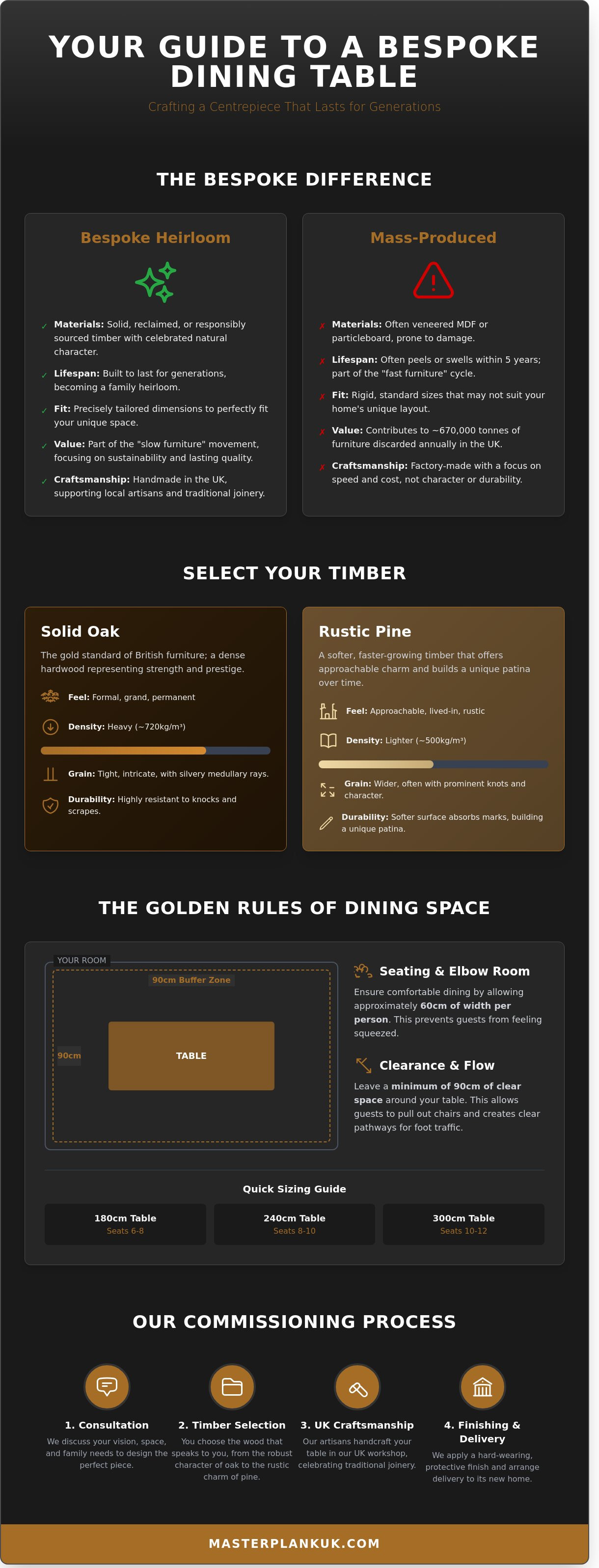
A bespoke dining table represents a deliberate departure from the "fast furniture" cycle that dominates the modern market. Recent data from the North London Waste Authority suggests that fewer than 1 in 10 people in the UK attempt to repair broken furniture, leading to roughly 670,000 tonnes of household items being discarded annually. We do things differently. To us, bespoke means every single inch is tailored to your specific life. It involves careful timber selection, precise dimensions, and hand-finished details that mass production simply cannot replicate. This is the essence of the slow furniture movement. We focus on the emotional value of the piece. When you sit down for a Sunday roast, you're touching a surface with a genuine history. The story of the wood remains visible, preserved carefully for the next generation to enjoy.
Moving Beyond the High Street
Standard furniture sizes often fail to meet the practical needs of unique British homes. You might be trying to fit a table into a narrow Victorian terrace or a sprawling period dining room with alcoves that defy standard measurements. High street options are rigid and unforgiving. They don't account for that extra 15cm you need to fit the whole family comfortably without blocking a doorway. Beyond the fit, there's a clear durability gap to consider. Mass-produced units often rely on veneered MDF, which tends to peel or swell within five years of heavy use. Our solid wood creations are different. They are heirloom pieces. They don't just last; they improve. Every scuff or mark from a family dinner adds to the character, making the furniture more beautiful as the decades pass.
The Masterplank Philosophy: Soul and Timber
We believe every plank has a soul. Our artisans spend hours selecting wood with unique grain patterns and weathered features that tell a story. We don't hide the past of our materials. Original nail holes, rustic saw marks, and natural cracks are celebrated as marks of authenticity rather than flaws. The Art of Woodworking requires a deep, tactile respect for the material, which is why we prioritise UK-based manufacturing and traditional joinery. Sustainability isn't a buzzword for our workshop; it's our foundation. By using reclaimed and responsibly sourced timber, we significantly reduce the environmental footprint of your home. Everything is handmade in the UK, ensuring that your bespoke dining table supports local craftsmanship. It's honest, rugged, and built to stand the test of time while keeping the history of the timber alive.
Selecting Your Timber: Comparing Solid Oak and Rustic Pine
Choosing the right timber for your bespoke dining table isn't just about aesthetics. It's a tactile decision that influences how your home feels every single day. Oak and pine sit at opposite ends of the density spectrum. Oak is a slow-growing hardwood with a density of approximately 720kg/m3, while pine is a softer, faster-growing timber typically averaging 500kg/m3. This difference in physical weight translates directly into the atmosphere of your room. A heavy oak piece feels permanent and formal. A chunky pine table feels approachable and lived-in. It's the difference between a grand manor house and a sun-drenched cottage kitchen.
The way these woods respond to daily life varies too. Oak's tight grain makes it incredibly resistant to the knocks and scrapes of a busy family home. It's a wood that demands respect. Pine is more forgiving in a different sense; its softer surface absorbs the marks of time, slowly building a patina that tells your family's story. When we source our timber, we look for pieces that align with Sustainable Forestry Practices to ensure every handcrafted centrepiece respects its natural origins. We believe the history of the tree is just as vital as the design of the legs.
The Timeless Appeal of a Solid Oak Dining Table
English and European Oak represent the gold standard of British furniture making. Prestige in every fibre. It's a timber of incredible strength, often taking 100 years to reach maturity. The grain is tight and intricate, featuring medullary rays that appear as shimmering, silvery ribbons across the surface. They're a hallmark of genuine oak. Because it's so hard-wearing, an oak table is an investment for generations. It suits a refined aesthetic, fitting perfectly into a Scandi-rustic or modern minimalist home. You can explore our full range of options in our Solid Oak Dining Table pillar.
Rustic Pine: Warmth, Character, and Versatility
Rustic pine is all about soul. Weathered textures. Honest history. We love working with reclaimed timber because it carries a past life. You'll see nail holes, weathered cracks, and original saw marks from the mill. These aren't flaws; they're the soul of the wood. Pine takes stains and waxes beautifully, allowing for deep, dark finishes or light, honeyed tones. It's the perfect choice for an Industrial style or a classic farmhouse look. If you're looking for a bespoke dining table that feels warm from the moment it arrives, pine is the answer. Discover more about these textures in our Rustic Dining Table guide. If you're ready to start your journey, feel free to browse our latest workshop creations.
Designing for Your Space: Dimensions, Clearance, and Seating
Creating a bespoke dining table involves more than just picking a beautiful piece of timber. It requires a deep understanding of how the piece sits within your home's architecture. The golden rule for any dining area is the 90cm buffer. This specific clearance between the table edge and the nearest wall or piece of furniture ensures guests can pull out their chairs and move around the room without feeling cramped. If you have a high-traffic walkway passing through the dining area, increasing this gap to 110cm provides a much more relaxed flow.
Table width is equally vital for the dining experience. A standard width of 90cm works well for individual place settings, but it can feel crowded if you enjoy serving "family style" with large shared platters in the centre. For those who host Sunday roasts or festive banquets, opting for a width of 100cm or 110cm offers that extra breathing room for candles, wine carafes, and serving dishes. This extra space ensures the character of the wood isn't hidden under a sea of crockery.
Calculating the Perfect Size for Your Room
To truly visualise how your bespoke dining table will occupy the space, we recommend the masking tape method. Clear the room and mark the table's footprint directly onto the floor. This physical outline helps you feel the scale in a way a drawing never can. You should allow for at least 60cm of "elbow room" per person along the length of the table. If you are Choosing the Perfect 10 Seat Dining Table, you'll need a minimum length of 280cm to ensure everyone sits comfortably without clashing cutlery. While we focus on the physical footprint, the longevity of your piece often depends on the final seal, much like the advice found in the University of Minnesota Extension's guide to wood finishing, which highlights how proper preparation ensures the timber survives decades of daily use.
Round vs. Rectangular: Which Bespoke Shape Wins?
The shape of your table dictates the social energy of your meals. A Solid Oak round table is the ultimate choice for smaller, square rooms or social butterflies. Because there are no heads of the table, conversation flows more naturally across the circle. Round tables also eliminate the risk of sharp corners in tight spaces. For larger, more formal settings, a rectangular refectory-style table provides a sense of tradition and grandeur.
- Pedestal Bases: Best for round tables to maximise legroom and prevent "knee-clashing" with table legs.
- Trestle Legs: Ideal for long benches, allowing guests to slide in easily.
- Extending Mechanisms: Perfect for those who want a compact daily table but need to host 12 people twice a year.
Deciding between a fixed top and an extending mechanism depends on your lifestyle. A fixed top celebrates the uninterrupted grain of the reclaimed timber, while a high-quality butterfly leaf extension offers the flexibility modern British homes often require. Both options maintain the structural integrity and rustic charm that defines handcrafted furniture.
Leg Styles, Finishes, and Caring for Your Timber
The base of your bespoke dining table defines its silhouette and dictates the flow of your room. While the tabletop holds the history of the grain, the legs provide the structural soul. You might lean towards traditional chunky wooden legs for a farmhouse feel that suggests permanence and weight. These timber bases offer a grounded, rustic aesthetic that complements older properties. Conversely, many homeowners now opt for modern industrial steel frames. Whether it is a sleek U-frame, a geometric X-frame, or a sturdy A-frame, steel creates a sense of light and space. Much like the design principles found in Industrial Desks, these metal bases allow light to pass under the furniture, making a large table feel less intrusive in a smaller dining area.
Choosing the Right Leg Profile
Steel frames aren't just about aesthetics; they offer incredible stability without the bulk of traditional joinery. We often recommend powder-coating your steel in matte black or charcoal to match existing interior hardware like door handles or light fittings. If you prefer the warmth of all-natural materials, chunky timber legs provide a classic look that feels incredibly secure. A 10cm square oak leg offers a tactile, heavy-set quality that steel cannot replicate. Your choice should balance the architectural lines of your home with the practical need for legroom, ensuring every guest sits comfortably without knocking knees on a corner post.
Maintenance: Keeping Your Table Beautiful for Decades
Reclaimed timber is a living, breathing material that reacts to its environment. The biggest challenge in a modern UK home is central heating, which can strip moisture from the wood. To prevent the timber from drying out or developing small shakes, we recommend keeping your home's humidity between 40% and 60%. Wood movement is a natural characteristic of bespoke timber, not a flaw. To keep the surface protected, follow a simple seasonal routine:
- Hardwax Oils: Apply a fresh coat every 12 to 18 months to nourish the fibres and maintain water resistance.
- Natural Waxes: Use a clear furniture wax every six months for a soft, satin sheen that enhances the weathered character.
- Dead-flat Matt Varnishes: These require the least maintenance, providing a tough barrier that looks completely natural and unpolished.
For daily life, treat your bespoke dining table with respect but don't fear using it. Use coasters for mugs and heat mats for dishes straight from the oven. If a spill occurs, blot it immediately with a damp cloth rather than scrubbing. For minor heat rings or scratches, a light sand and a dab of fresh oil usually vanish the mark, blending it back into the wood's unique story. This ability to repair and renew is why handcrafted timber furniture outlasts mass-produced alternatives by generations.
Commissioning Your Masterpiece: The Masterplank Process
The journey to owning a bespoke dining table begins with a simple conversation. It's a collaborative process where your vision meets our technical expertise. We don't believe in the "one size fits all" approach of the modern high street. Instead, we focus on creating a piece that fits your life perfectly. This investment is about more than just furniture; it's about choosing a centrepiece that won't need replacing in 60 months. Our tables are built to endure, gaining more character with every family meal and celebration.
Customisation is at the heart of what we do. You have the freedom to dictate the finer details that define the finished look. You might prefer a live edge, which retains the natural, organic curve of the tree to showcase the raw soul of the timber. Alternatively, a square edge offers a clean, architectural silhouette that suits a more contemporary space. Every choice you make is backed by our "Handmade in the UK" badge. This isn't just a label. It's a 100% guarantee of ethical labour, reduced transport miles, and the highest standards of British craftsmanship.
Supporting independent makers is central to our philosophy; if you want to discover more small and medium-sized businesses across the UK, you can visit Anglia Market.
The Workshop Journey
Step inside our workshop and the first thing you'll notice is the scent. It's the deep, earthy aroma of seasoned oak and reclaimed pine. You'll hear the steady, rhythmic shave of a hand plane and the gentle hum of the sander. Every bespoke dining table we produce is a singular project. There are no conveyor belts here. Instead, you'll find a maker dedicated to your specific piece of timber. They'll study the grain, work around the knots, and celebrate the character marks that make the wood special. Once the final coat of wax is applied, that maker signs off on the work. It's a personal seal of quality that mass-produced furniture can't hope to match.
Ready to Start Your Bespoke Project?
Before you reach out, we recommend gathering a few bits of inspiration. Take clear measurements of your room and think about how many people you need to host on a Sunday afternoon. Having a rough idea of the seating capacity helps us guide you toward the right dimensions. If you're looking to carry that rustic aesthetic through the rest of your home, we can create matching benches or even Solid wooden desks for your workspace. Take a look through our gallery to see what's possible. When you're ready, start the conversation with us. We're here to help you create a centrepiece that tells your story.
Bring Your Vision to the Table
Choosing a bespoke dining table is an investment in your home's story and a commitment to quality that outlasts seasonal trends. You've explored how selecting the right timber, whether it's the enduring strength of solid oak or the warm character of rustic pine, sets the foundation for your space. We've looked at the technical side too, from ensuring comfortable seating clearances to picking a finish that protects the wood's natural soul. It's about more than just dimensions; it's about creating a functional piece of art where memories are made.
At Master Plank UK, our team brings over 10 years of experience in traditional woodworking to every project. We take pride in our sustainable approach, sourcing timber that celebrates its unique history through weathered textures and honest imperfections. Every piece is handmade in the UK by master craftsmen who care about the journey of the wood as much as the final result. Your home deserves a centrepiece that's built with purpose and passion.
Browse our Bespoke Dining Table Collection and start your commission today
We can't wait to help you craft a piece that truly belongs in your home.
Frequently Asked Questions
How long does a bespoke dining table typically take to make?
A bespoke dining table usually takes between 6 to 10 weeks from the initial design consultation to final delivery at your home. This timeframe allows our craftsmen to source the perfect reclaimed timber and ensure the wood is properly seasoned for indoor use. Every piece is handmade in the UK, following a slow-furniture philosophy that prioritises quality over speed. We'll keep you updated throughout the build to ensure your new centrepiece arrives exactly when expected.
What is the best wood for a dining table that will see heavy daily use?
Reclaimed pitch pine or solid oak are the best choices for a table facing the rigours of daily family life. These dense timbers offer exceptional durability and a tight grain that resists the knocks of a busy household. Because we celebrate the natural character of our wood, minor marks from daily use often blend into the existing nail holes and weathered textures. This ensures your table looks better as it ages, gaining a unique soul that high-street veneer can't replicate.
Will my bespoke solid wood table warp near a radiator?
Placing a solid wood table directly next to a radiator can cause the wood to move or develop cracks due to rapid moisture loss. We recommend maintaining a minimum distance of 1 metre between your furniture and any direct heat source to protect the timber's integrity. While our reclaimed wood is seasoned to roughly 10% moisture content for stability, natural materials will always react to extreme temperature shifts. Proper placement ensures the joints remain tight and the surface stays level for decades.
How much space should I leave between the table and the wall?
You should leave at least 90cm of clearance between the edge of your table and the nearest wall or piece of furniture. This measurement provides enough room for guests to pull out chairs comfortably and walk behind those who are seated. If your dining room is a primary thoroughfare, increasing this gap to 120cm will improve the flow of the house. Getting these dimensions right ensures your handcrafted centrepiece feels like a natural fit rather than an obstacle.
Can I choose a specific stain colour to match my existing furniture?
We offer a range of bespoke wax finishes and stains designed to complement the existing woodwork in your home. While the history of reclaimed timber means every plank absorbs pigment differently, we can provide samples to help you find the closest match. Whether you're looking for a dark, moody oak or a light, honeyed pine, we'll work with you to achieve a cohesive look. This personal touch ensures your new table feels like it's always been part of your room's story.
Is bespoke furniture more sustainable than high-street options?
A bespoke dining table is significantly more sustainable, especially when using reclaimed timber that saves old wood from landfill. Research by the Furniture Industry Research Association indicates that high-quality solid wood furniture can last 20 times longer than mass-produced flat-pack items. By choosing a table handmade in the UK, you're also reducing the carbon footprint associated with international shipping. It's a conscious investment in a circular economy that values the planet as much as the product.
What is the difference between a live edge and a square edge table?
A live edge table retains the natural, organic silhouette of the tree's outer bark, while a square edge is cut for a clean, linear finish. Live edges celebrate the wild, unpredictable curves of the timber, making every table a one-of-a-kind sculpture. Square edges offer a more traditional, architectural look that fits perfectly in contemporary or formal settings. Both styles highlight the stunning grain patterns of our salvaged wood, letting the material's history take centre stage.
Do you offer matching benches for your bespoke tables?
We create matching benches for every bespoke dining table we build, ensuring the timber character and finish are perfectly synchronised. Benches are a practical, space-saving solution, as they can often be tucked entirely under the table when not in use. This setup is ideal for family gatherings, comfortably seating more people than individual chairs. Each bench is handcrafted with the same level of care and attention to detail as the table itself.


