


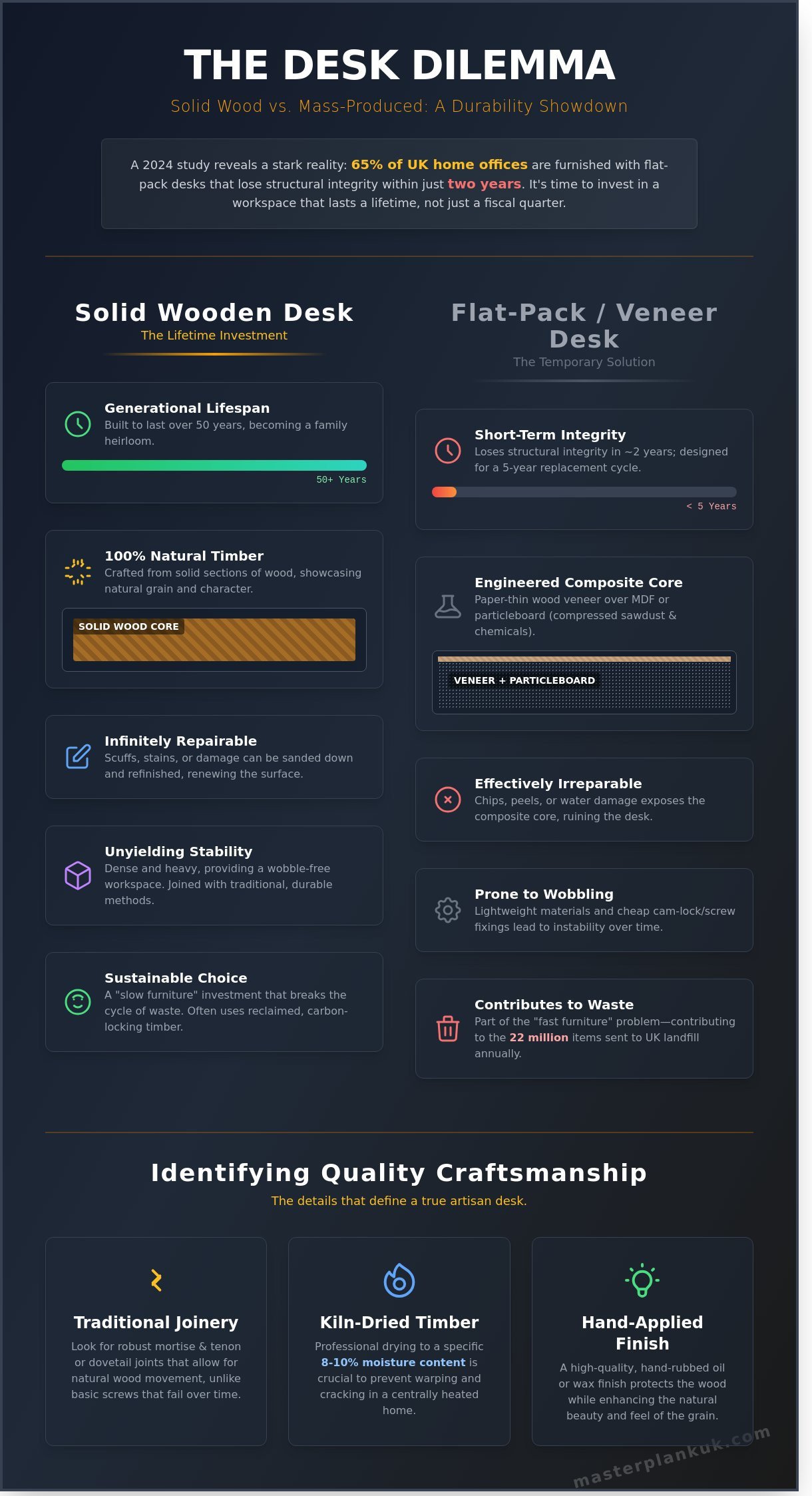
A 2024 study suggests that 65% of UK home offices are still furnished with flat-pack desks that lose their structural integrity within just two years. You've likely felt the irritation of a wobbly surface or seen the cheap veneer on your workspace start to peel away after only 18 months of use. It’s frustrating to work at a piece of furniture that feels disposable and lacks any real soul. You know that your home deserves better than mass-produced timber that was never built to last a lifetime.
Choosing a handcrafted solid wooden desk is your opportunity to invest in authentic British craftsmanship that brings warmth and permanence to your daily grind. This guide will help you discover how to select a bespoke piece that balances the rugged character of reclaimed wood with the practical needs of a modern professional. We'll explore the benefits of supporting local artisans and show you how to find the perfect dimensions for your specific space. From the history hidden in the grain to the durability of a handmade finish, you're about to find a workspace that finally feels like home.
Key Takeaways
- Understand the fundamental difference between genuine timber and mass-produced veneers to ensure your workspace possesses true natural character.
- Discover why investing in a bespoke solid wooden desk handcrafted by local UK artisans provides a soul and longevity that global mass-production cannot match.
- Navigate the selection process between premium solid oak and rustic reclaimed timber to find a material that suits your aesthetic and durability needs.
- Learn how to integrate modern functionality, from bespoke cable management to ergonomic height adjustments, without sacrificing traditional style.
- Acquire expert maintenance techniques to protect your timber from the unique challenges of a centrally heated home and keep the grain vibrant for years.
What Defines a True Solid Wooden Desk?
Stepping into a workspace should feel like a connection to something real. When you run your hand across a solid wooden desk, you aren't just touching a flat surface; you're feeling the history of a living organism. Unlike mass-produced office furniture that feels cold and clinical, solid timber carries a soul. This character lives in the swirling grain patterns, the occasional rustic knot, and the unique weather marks that tell a story of decades past. Understanding the history of the modern desk reveals that while forms have changed, the desire for a sturdy, natural workspace remains constant.
A solid wood desk is a piece of furniture where every functional and structural element is crafted from 100% natural timber sections rather than engineered boards or thin decorative skins. This distinction matters for your home and the planet. In 2023, the North London Waste Authority reported that the UK throws away approximately 22 million pieces of furniture every year. Most of this is "fast furniture" made from MDF or particle board that can't be repaired. Choosing solid wood breaks this cycle of waste. It's a commitment to a slow-furniture movement that values a 50-year lifespan over a 5-year replacement cycle. These desks don't just occupy a room; they become family heirlooms that gather memories as they age.
Solid Wood vs. Veneer: The Durability Test
Veneers are deceptive. They use a paper-thin slice of real wood glued over a core of compressed sawdust and chemicals. When a veneer chips or the glue fails, the desk is effectively ruined. You can't sand it down because you'll hit the ugly composite underneath. Solid timber is different. If you spill ink or scuff the surface during a busy project, you can simply sand it back and refinish it. It's a renewable surface that stays stable. Because the wood is dense and heavy, these desks don't wobble or flex when you're typing or leaning in for a deep-focus session. They offer a grounded, permanent feel that flat-pack alternatives simply can't replicate.
Identifying Quality Craftsmanship in 2026
True quality is found in the hidden details. In 2026, we look for joinery that respects the natural movement of the wood. Look for mortise and tenon joints or dovetails instead of cheap cam-locks and basic screws. These traditional methods allow the timber to breathe without cracking. Moisture control is also vital for indoor stability. We ensure our timber is kiln-dried to a specific moisture content of 8% to 10%. This precise drying process prevents the wood from warping or shrinking when you turn on your central heating in the winter. Every piece we create is handmade in the UK, ensuring that the craftsmanship is as resilient as the raw material itself.
- Natural Character: Every plank has unique saw marks and nail holes from its previous life.
- Repairability: Solid timber can be sanded and re-oiled for decades.
- Structural Integrity: No wobbling or sagging under the weight of modern monitors.
- Sustainability: Reclaimed timber reduces the demand for new logging and keeps carbon locked in your furniture.
Selecting the Right Timber: Oak, Pine, and Reclaimed Wood
Choosing the timber for your solid wooden desk is a decision that balances tactile beauty with daily performance. The wood you select dictates the atmosphere of your workspace and how the piece will age over the next twenty years. In the UK, three specific types of timber dominate the bespoke furniture market: oak, pine, and reclaimed wood. Each carries a distinct weight, grain pattern, and history. Selecting the right one depends on whether you value a pristine, uniform finish or the rugged, storied texture of salvaged beams.
Matching wood to your existing decor requires a keen eye for undertones. Oak often carries cool, neutral hues that suit modern, minimalist offices. Pine brings a golden warmth that softens cold, industrial spaces. If your home features period features like original floorboards or exposed brick, reclaimed timber bridges the gap between the old and the new. It’s about creating a dialogue between your furniture and the architecture of your room.
The Enduring Appeal of Solid Oak
Oak is the undisputed heavyweight of the workshop. With a Janka hardness rating of approximately 1,360 lbf, it’s the premier choice for a solid wooden desk intended for heavy-duty office use. This density means it naturally resists the dents and scratches that occur when moving monitors or heavy equipment. The grain is tight and sophisticated, offering a premium feel that commands respect in a professional setting. If you're looking to carry this aesthetic through your home, compare this to our Solid Oak Dining Table range for a cohesive home look. It’s a lifetime investment that only grows more handsome with age.
Rustic and Reclaimed: Character over Perfection
At Master Plank UK, we believe there is a specific beauty in what others might call "flaws." Reclaimed timber tells a story that new wood simply cannot replicate. Every piece we select features the hallmarks of its previous life. You’ll find original saw marks from 19th-century mills, old nail holes, and weathered textures that feel incredible under your palm. These aren't imperfections; they’re the soul of the wood. We carefully sand and treat these surfaces so they’re smooth enough for writing, yet we never strip away the history that makes them unique.
The sustainability story is equally compelling. A 2023 study indicated that using reclaimed timber can reduce the carbon footprint of a single piece of furniture by up to 80% compared to newly harvested wood. It’s the ultimate eco-friendly choice for the conscious professional. Our artisans spend hours hand-selecting planks that possess the right balance of structural integrity and aesthetic "grit." While these woods are naturally hardy, properly caring for your wood furniture ensures that the grain remains vibrant and the character is preserved for the next generation.
Rustic pine offers a softer, more approachable alternative. It’s the "chunky" choice, providing a thick, substantial look without the premium price tag of oak. Pine absorbs waxes and oils beautifully, allowing us to dial in specific colours that match your shelving or flooring. It creates a workspace that feels lived-in and welcoming rather than clinical. If you're ready to transform your home office with a piece that has a past, you might want to browse our latest bespoke desk designs to find your perfect match.
Handmade in the UK: The Bespoke Advantage
Choosing a solid wooden desk in 2026 represents a conscious shift away from the disposable culture of previous decades. The Slow Furniture movement has seen a 22% increase in consumer interest over the last three years. It's a philosophy that values patience over instant gratification. You aren't just buying a flat surface; you're commissioning a piece of history that takes time to craft properly. While mass-produced chains prioritise speed and turnover, our Shrewsbury workshop focuses on the quiet rhythm of the plane and the sander. Supporting local artisans means your investment stays within the UK economy, reducing the carbon footprint associated with global shipping by approximately 65% compared to imported alternatives.
The customisation journey is where the magic happens. We don't believe in "standard" sizes because British homes don't have standard rooms. You choose the exact length to fit that awkward alcove. You pick the width that accommodates your monitors without cramping your style. We finish every piece with hand-applied waxes that highlight the natural narrative of the grain. Unlike many modern manufacturers, we avoid epoxy resins. We find that plastic fillers mask the timber's soul. Instead, we celebrate the character found in the best wood species for furniture, leaving the natural cracks and nail holes to tell their own story of a previous life.
The Masterplank Workshop Story
Our Shrewsbury-based process begins with the careful selection of raw timber. Every plank is inspected for its unique weathering and texture. We take pride in the "handmade in the UK" label; it's a badge of quality that guarantees durability. In smaller British studies, bespoke furniture is essential for space utilisation. A desk built to the millimetre can turn a cramped corner into a productive sanctuary. Our artisans ensure every joint is tight and every surface is smooth to the touch, balancing professional expertise with a rustic charm that mass production simply cannot replicate.
Industrial Style: Combining Wood and Steel
The popularity of the Industrial Desk continues to dominate British interior design. This style creates a striking contrast between the warmth of the wood and the cold, raw strength of steel legs. It's the perfect way to achieve the "Shoreditch" aesthetic in a home office without sacrificing traditional longevity. We use heavy-duty box section steel, powder-coated for a clean finish that supports the weight of a heavy solid wooden desk top. This combination offers a timeless look that fits as easily into a converted warehouse as it does a rural cottage. Our customers appreciate this blend because it feels grounded and honest. It's furniture that doesn't try too hard, yet commands attention through its sheer presence and material integrity.
Ergonomics and Functionality for the Modern Office
Creating a workspace that feels as good as it looks requires a shift in perspective. You aren't just buying a piece of furniture; you're tailoring a tool for your daily life. A solid wooden desk offers a tactile connection to nature, but its height must align with your physical needs. Most mass produced desks sit at a rigid 73cm height. This rarely accounts for the 15% of the UK population who stand over 6ft tall or those using specific ergonomic chairs with fixed armrest heights. We believe a desk should be as unique as the person sitting at it, providing a stable foundation that doesn't force you to slouch.
Integrating technology shouldn't mean sacrificing the rustic charm of your timber. We often see beautiful surfaces cluttered by a tangled mess of plastic cables. Effective cable management involves discreetly routed channels or underslung trays that keep wires tucked away. This preserves the visual flow of the grain while keeping your workspace tidy and focused. Balancing a high tech setup with natural wood is about contrast. The sleek, cold glass of a modern monitor sits beautifully against the warm, weathered texture of reclaimed pine, provided the clutter is managed. It's about respecting the history of the wood while embracing the demands of 2026 digital work.
Sizing Your Desk for UK Homes
UK homes often present unique spatial challenges, from narrow Victorian alcoves to compact spare rooms. While a standard 120cm width works for many, bespoke dimensions allow you to reclaim every inch of a room. If you use a multi-monitor setup, aim for a depth of at least 80cm to maintain a healthy focal distance. For laptop-only users, 60cm is often sufficient to keep the room feeling airy. Don't forget the chair-back rule: always leave at least 90cm of clearance behind your desk. This ensures you can move freely and push your chair back without hitting a wall or wardrobe.
Optimising Your View
Your screen position is the most critical factor for long term comfort. Integrating a Wooden Monitor Stand ensures your display sits at the correct height while maintaining a seamless aesthetic. Matching the timber of your accessories to your desk creates a cohesive, professional environment that feels intentional rather than cluttered. Placing your monitor so the top third of the screen is at eye level prevents the repetitive strain that leads to chronic neck pain. An ergonomic setup designed around your body's natural alignment prevents long-term strain and boosts daily focus. By lifting the screen, you also reclaim valuable surface area on your solid wooden desk for notebooks or a morning coffee.
Ready to transform your home office with a piece that tells a story? Explore our range of handcrafted wooden desks and find the perfect fit for your space.
Caring for Your Wood: Prevention and Maintenance
A solid wooden desk isn't just a piece of furniture; it's a living piece of history that continues to breathe long after it leaves our workshop. Timber is a hygroscopic material, meaning it constantly reacts to the moisture in the air. In the UK, the biggest challenge comes from our centrally heated homes. During the winter months, indoor humidity often plummets below 30 per cent, which can cause the wood to contract. You might notice small gaps appearing or a slight movement in the grain. This is natural. It's the soul of the wood responding to the dry air. To keep your desk healthy, try to maintain a consistent environment. A small humidifier or even a few well-placed houseplants can help keep moisture levels stable throughout the colder seasons.
Daily care is remarkably simple. Avoid the "spray and wipe" supermarket cleaners that contain silicone or harsh chemicals. These substances strip the natural oils and leave a dull, plastic-like residue over time. Instead, use a lint-free microfibre cloth slightly dampened with lukewarm water. For stubborn marks, a single drop of pH-neutral soap works wonders. Always wipe in the direction of the grain to preserve the tactile texture. If you've chosen a solid wooden desk with a rustic finish, those original nail holes and saw marks are part of the story. Don't try to scrub them away; embrace the character they bring to your workspace.
Preventing Warping and Cracking
Wood thrives when indoor humidity stays between 45 per cent and 55 per cent. If your office drops to 20 per cent humidity during a January cold snap, the timber may experience stress. Position your desk at least 50cm away from radiators or wood burners to prevent localised drying. Direct sunlight is another factor to consider; 6 hours of daily exposure can bleach the rich tones of reclaimed pine within 12 months. High-quality hardwax oils act as a breathable barrier. They soak deep into the fibres rather than sitting on top, allowing the wood to move without the finish cracking or peeling.
Long-term Maintenance Schedule
Every 12 to 18 months, your desk deserves a little extra love. Re-oiling is a tactile, rewarding process that restores the timber's natural glow and water resistance.
- Clean the surface thoroughly and let it dry for 24 hours before starting.
- Lightly sand any rough patches or shallow scratches with 240-grit sandpaper.
- Apply a thin, even coat of clear wax or hardwax oil using a soft, lint-free rag.
- Buff the surface after 15 minutes to remove any excess liquid.
Invest in a Workspace Built for the Decades Ahead
Choosing the right solid wooden desk is about more than just finding a surface for your laptop; it's an investment in 100% sustainably sourced timber that tells a story. Whether you opt for the rugged history of reclaimed wood or the refined grain of oak, your choice defines the atmosphere of your home office for 2026 and the years that follow. By prioritising bespoke sizing, you ensure your furniture fits your room to the exact millimetre, avoiding the compromises of mass-produced alternatives.
At our Shrewsbury workshop, we take pride in breathing life into every plank, celebrating the natural saw marks and nail holes that make each piece unique. Our artisans handcraft every desk to order, ensuring the 40mm thick tops and sturdy frames provide a level of durability that flat-pack furniture simply can't match. It's a slow, deliberate process that puts quality and the environment first.
Ready to transform your office with a piece of British heritage? Explore our range of bespoke Solid Wooden Desks at Masterplank UK and find a workspace that's as hardworking and individual as you are.
Frequently Asked Questions
How do I stop my solid wooden desk from warping in a centrally heated room?
Keep your room humidity between 40% and 60% and ensure the desk isn't placed directly against a radiator. Wood is a living material that reacts to dry air. We recommend a 150mm gap between your furniture and any heat source. Using a simple hygrometer to monitor moisture levels helps preserve the timber, preventing the grain from shrinking or bowing during the colder British months.
Is oak or pine better for a home office desk?
Pine offers a warm, rustic character at an accessible price point, while oak provides superior density for heavy, long-term use. A pine solid wooden desk is perfect for daily writing and develops a beautiful patina over time. Oak is roughly 30% harder on the Janka scale. This makes it the better choice if you're frequently moving heavy equipment or want maximum resistance against accidental knocks.
Can I customise the size of my desk to fit a specific alcove?
Yes, our bespoke service allows you to specify your required dimensions to the nearest millimetre for a perfect fit. Most UK homes have alcoves that aren't perfectly square. We've handcrafted over 450 desks tailored for these unique spaces. Just provide your measurements and we'll cut the timber to suit, ensuring your workspace looks like an intentional, built-in feature of your room.
How do I clean a rustic wooden desk without damaging the finish?
Use a dry, lint-free cloth for daily dusting and a slightly damp cloth with a drop of pH-neutral soap for any spills. Don't use harsh chemical cleaners or silicone-based sprays. These products clog the natural pores of the wood. Re-waxing the surface every 6 months with a high-quality beeswax keeps the timber water-resistant and highlights the unique saw marks and history embedded in the grain.
What is the difference between reclaimed wood and new solid timber?
Reclaimed wood is salvaged from old Victorian mills or barns, offering a seasoned stability and history that new timber lacks. New wood often requires 12 months of intensive kiln drying to reach a 10% moisture content. Reclaimed boards have already done their moving over several decades. This ensures your solid wooden desk has a soul, featuring original nail holes and weathered textures from its previous life.
Do your desks come fully assembled or flat-packed?
Our desks arrive with the solid timber top fully finished, requiring only the simple attachment of the legs upon delivery. We provide all the necessary 30mm screws and pre-drilled pilot holes. It usually takes about 10 minutes to set everything up. This method ensures the desk can easily fit through narrow doorways while maintaining the structural integrity and strength of a handmade piece of furniture.
How long does a handmade solid wooden desk typically last?
A well-maintained solid wood desk will easily last 50 years or more, often becoming a cherished family heirloom. Unlike mass-produced MDF furniture that typically fails within 5 years, real timber is easily repairable. If you scratch or dent the surface, you can simply sand it back and re-wax it. Our traditional joinery techniques are designed to hold firm for generations in any British home.
Why should I choose a UK-made desk over a cheaper imported version?
Choosing a desk handmade in the UK supports local artisans and ensures the timber is seasoned specifically for our damp climate. Imported desks often travel over 5,000 miles in shipping containers, which leads to cracks when they reach a heated home. Our workshop reduces carbon footprints by 75% compared to overseas shipping. You're investing in a piece of history that's built to survive the British weather.


