


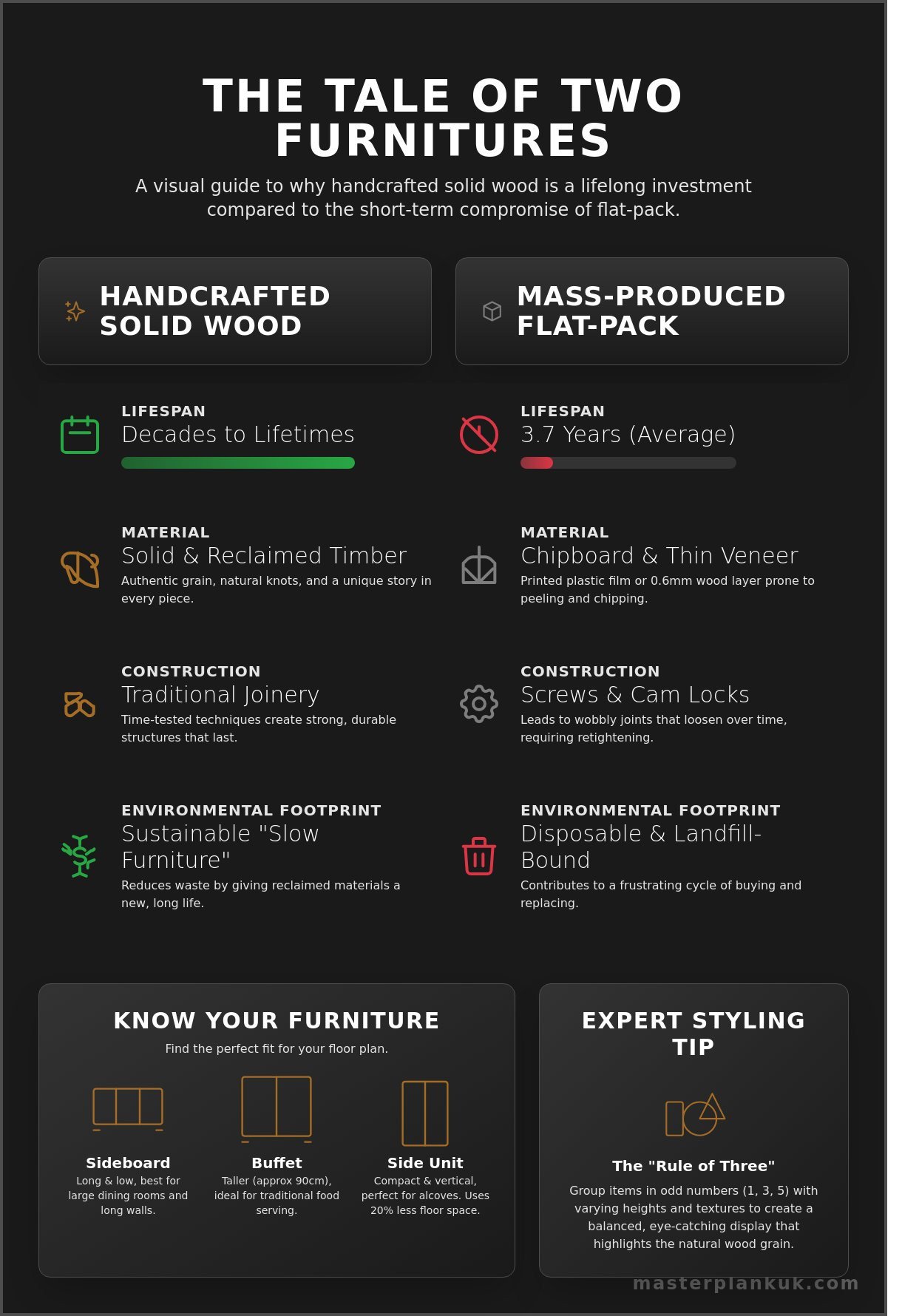
The average flat-pack furniture item ends up in a UK landfill just 3.7 years after purchase, leaving behind a trail of peeled veneers and wobbly joints. It's a frustrating cycle of buying and replacing that leaves your living space feeling temporary rather than timeless. When you invest in a handcrafted side unit, you aren't just buying storage; you're bringing a piece of British history into your home. We know you're tired of generic designs that fail to fit your specific 120cm alcove or wood that looks like it was printed in a factory.
We agree that your home deserves furniture with a soul, built to withstand the rigours of daily life without losing its charm. This guide will show you how to choose, style, and commission a bespoke side unit that brings lifelong character and sustainable quality to your space. You'll discover the secrets to selecting the right timber and how to ensure your new piece ages beautifully for decades to come.
Key Takeaways
- Understand the versatile role of a side unit and how it differs from traditional sideboards to find the perfect storage solution for your living space.
- Learn to identify the unique sensory qualities of solid oak and rustic pine, ensuring your chosen timber provides both durability and timeless aesthetic appeal.
- Uncover the structural advantages of traditional joinery over flat-pack alternatives and why choosing handcrafted furniture is a more sustainable investment for your home.
- Gain expert tips on styling your furniture using the "Rule of Three" to create a balanced, eye-catching display that highlights natural wood grains.
- Discover the simple steps to measuring your room and commissioning a bespoke piece that fits the unique proportions of your home perfectly.
What is a Side Unit? Understanding the Versatile Storage Workhorse
Every home needs a workhorse. A piece that carries the weight of daily life without losing its charm or character. Finding the right answer to What is a Side Unit? requires looking past the surface of the timber. At its core, it's a multifunctional furniture piece designed to provide a sturdy display surface while hiding away the clutter of modern living. Unlike mass-produced alternatives, a handcrafted side unit from Master Plank UK is built with a soul. Each knot, nail hole, and weathered grain tells a story of the wood's previous life, now repurposed into a durable staple for your hallway, lounge, or dining room.
The versatility of this piece comes from its footprint. In a 2024 survey by the British Furniture Manufacturers (BFM), 42% of UK homeowners cited "flexible storage" as their primary requirement when purchasing new furniture. The side unit meets this need perfectly. It bridges the gap between a decorative console and a heavy wardrobe. It's a place for your keys, a lamp, or a vase of flowers, while the cupboards below hold everything from board games to table linens. We don't just build boxes; we create bespoke anchors for your home that celebrate the raw, honest beauty of reclaimed timber.
Sideboards vs. Buffets vs. Side Units
Understanding the terminology helps you choose the right fit for your floor plan. Sideboards are traditionally long and low, often featuring short legs or sitting flush to the floor. They've lived in British dining rooms since the 18th century. Buffets are their taller cousins. They were designed at a specific height, usually around 90cm, to make serving food easier during formal gatherings. The modern side unit is the compact, agile alternative. It's often narrower and more vertical, making it ideal for the smaller alcoves and entryways found in many UK terrace houses. It offers the same robust storage as a sideboard but occupies 20% less floor space on average.
The Evolution of the "Side Piece" in Modern Interior Design
The way we live in 2026 has fundamentally changed our relationship with furniture. We're moving away from the "disposable" culture of the early 2000s. A 2025 report on British consumer habits showed a 18% increase in "Slow Furniture" purchases, where buyers prioritise longevity over price. Side units are no longer confined to the dining room. They've become essential home office staples for filing or stylish media hubs in the living room.
It's a shift from purely functional storage to aesthetic focal points. We see customers choosing bespoke pieces because they want to touch the wood and feel the history of the grain. A handmade unit isn't just a place to put things. It's a statement of values. Choosing reclaimed wood over flat-pack alternatives means you're investing in a piece of history that's handmade in the UK. We embrace the imperfections. Those saw marks and cracks aren't flaws; they're the fingerprints of the craftsman and the legacy of the salvaged timber. This evolution reflects a deeper desire for homes that feel grounded, authentic, and uniquely ours.
- Sideboards: Best for large dining rooms and long walls.
- Buffets: Ideal for traditional serving and high-capacity storage.
- Side Units: Perfect for hallways, alcoves, and multifunctional modern spaces.
Selecting the Perfect Timber and Style for Your Side Unit
Choosing a piece of furniture is a sensory experience that goes far beyond simple measurements. When you run your hand across a solid wood side unit, you feel the history of the tree. The warmth of the timber, the intricate dance of the grain patterns, and the presence of natural knots create a tactile connection that mass-produced items lack. Unlike flat, cold laminates, real wood breathes. It responds to the light in your room, offering a depth of colour that changes throughout the day. A study by the University of British Columbia in 2011 found that the presence of wood in interior environments can actually lower stress levels, making your choice of material vital for a calm home.
The "colour" of real timber is impossible to replicate with "oak effect" veneers. Veneers are often just a 0.6mm thick slice of wood or, worse, a printed plastic film glued onto chipboard. They lack the soul and durability of the real thing. When we talk about Selecting the Perfect Timber, we look for pieces that tell a story. A solid wood unit won't peel or chip at the edges after three years. Instead, it grows with you. If it gets a scratch, it's a memory; if it gets a stain, it can be sanded back and restored to its former glory. This longevity is the cornerstone of sustainable living.
Solid Oak: The King of Hardwoods
Oak is the gold standard for a reason. It's incredibly dense and heavy, making it the perfect choice for a "forever" side unit that might hold heavy stacks of books or a ceramic collection. You can choose a clean, contemporary grain for a minimalist look or a character-rich rustic grade that celebrates every swirl. Over decades, oak develops a rich patina, a natural darkening that acts as a visual record of the piece's life in your home. It needs very little maintenance, usually just a light wax every 12 months to keep the fibres hydrated.
Rustic Pine and Reclaimed Wood Aesthetics
Pine offers a different kind of magic. It's softer than oak but brings an immediate sense of farmhouse warmth and affordability. Chunky pine is the backbone of the rustic look. It feels relaxed and lived-in. For those who love the industrial aesthetic, we often pair this timber with raw steel legs to create a modern loft feel. We don't hide the saw marks or the old nail holes in our reclaimed pieces. These 5mm deep scars are marks of authenticity. They prove the wood had a previous life, perhaps in a 19th-century warehouse or a local textile mill. You can explore our range of finishes to see how these textures can be highlighted to match your specific decor, whether you're aiming for a coastal retreat or a gritty urban apartment.
Handcrafted Quality vs. Mass-Produced Flat-Pack: Why Solid Wood Wins
Choosing a new side unit often presents a choice between immediate savings and long-term value. High-street retailers push "fast furniture" that relies on aesthetic appeal rather than structural integrity. Recent data from the North London Waste Authority suggests that 22 million pieces of furniture are discarded annually in the UK; much of this consists of cheap, composite-based items that cannot be repaired. When you buy a mass-produced piece, you're often buying a countdown to its eventual disposal.
Traditional joinery is the heartbeat of quality furniture. Unlike flat-pack items held together by cam locks and plastic dowels, handmade pieces rely on the inherent strength of the material. By studying the properties of solid wood, our craftsmen understand how to account for natural movement, ensuring a side unit remains stable through the seasons. It's an investment that grows in character, rather than a purchase that loses value the moment it leaves the box. Choosing UK-made timber furniture also slashes the carbon footprint associated with international shipping, making it a responsible choice for the planet.
The Pitfalls of Veneer and MDF
Most mass-produced units are built from Medium Density Fibreboard (MDF) or chipboard. These materials are covered in a thin veneer, often less than 0.6mm thick, which mimics the look of real timber. Once that layer is chipped or moisture gets into the core, the material swells and degrades. This leads to the "wobble factor" where fixings pull away from the soft boards, making the piece unstable. You can't sand out a scratch on a veneered surface without hitting the glue layer underneath. Solid wood allows for a lifetime of refinishing; you can sand it, wax it, and breathe new life into it whenever you choose.
The Masterplank Philosophy: Handmade in the UK
Our Shrewsbury workshop is a place of sawdust and history. We don't use assembly lines; we use hands, eyes, and years of experience. Every piece starts as raw timber, selected for its unique grain and weathered texture. By choosing Masterplank, you are supporting local artisans and a British woodworking heritage that dates back centuries. Masterplank is dedicated to using only solid, sustainably sourced timber in every bespoke creation we build. This ensures your furniture has a soul and a story that mass-produced items simply lack. From the first cut to the final coat of wax, we treat every plank with the respect it deserves.
How to Style and Organise Your Side Unit for Maximum Impact
A bespoke side unit is more than just a storage solution; it is a stage for your home’s personality. To create a professional look, designers often rely on the "Rule of Three." This involves grouping items in odd numbers to create a sense of balance that feels natural rather than forced. Start with a tall element, such as a vintage-inspired lamp, add a medium-sized organic piece like a potted fern, and finish with a smaller, tactile object like a hand-turned wooden bowl. This triangular arrangement creates a visual rhythm that draws the eye across the unique textures and weathered character of the reclaimed timber. Balancing height is essential. If every object is the same size, the display feels flat and uninspired. By mixing smooth glass with the rugged, rustic grain of the wood, you create a sensory experience that celebrates the materials.
Creating a Visual Anchor in Your Living Space
In modern open-plan homes, furniture must work harder to define specific zones. A solid wood side unit acts as a grounding element, separating the dining area from the lounge without the need for heavy partitions. To enhance this effect, hang a large circular mirror or a piece of textured wall art precisely 15 to 20 centimetres above the surface. This creates a cohesive vertical display that draws the eye upward. For evening ambience, use table lamps with warm 2,700K bulbs. The soft glow catches the natural saw marks and nail holes in the wood, celebrating the history of the material while making the room feel snug and inviting. This lighting highlights the soul of the piece, turning a functional object into a glowing focal point after the sun sets.
Practical Storage Solutions for Busy Households
A beautiful home stays that way when everything has a place. Internal organisation is the secret to a calm living space. Data from 2023 UK interior trends reports suggest that 68% of homeowners now prioritise "hidden" storage to manage digital clutter. Our furniture is designed to handle the weight of modern life while looking effortless.
- The Everything Drawer: Use small felt or bamboo dividers to house keys, chargers, and coasters. It prevents the drawer from becoming a chaotic junk space and protects the internal wood finish.
- The Social Hub: Clear the surface to create a dedicated drinks station or coffee bar. A heavy, handmade unit easily supports the weight of glass decanters and stone coffee canisters.
- Tech and Toys: Use the lower cupboards for bulky items like game consoles or children’s toys. This keeps the floor clear while ensuring essentials are within reach for daily use.
Seasonal styling keeps your home feeling fresh as the year progresses. In the autumn months, introduce brass accents and dried foliage to complement the deep, warm tones of the wood grain. When spring arrives, swap these for clear glass vases and fresh eucalyptus to reflect the lighter mornings. These small changes ensure your furniture evolves with your lifestyle. Every piece we make is handmade in the UK, built with a durability that allows you to re-style and re-organise for decades to come. The wood only gets better with age, absorbing the history of your home into its grain.
Commissioning Your Bespoke Side Unit with Masterplank UK
Standardised furniture often fails to meet the unique demands of British architecture. Over 60% of UK period properties feature irregular alcoves or narrow entryways where mass-produced pieces simply won't fit. Choosing a bespoke side unit allows you to reclaim these awkward spaces, turning a redundant corner into a functional focal point. Since 2016, our Shropshire workshop has specialised in creating furniture that respects the history of the timber and the specific dimensions of your home. We don't believe in "close enough" measurements; we believe in furniture that looks like it was grown for the room it inhabits.
Accuracy is the foundation of a successful commission. When measuring your space, always use a metal tape measure for precision. We recommend measuring the width at the floor, the middle, and the top of the wall, as older houses rarely feature perfectly vertical surfaces. Subtract 10mm from your smallest measurement to ensure a comfortable fit that allows the timber to breathe. Once you provide these dimensions, our consultation process begins. We discuss how you intend to use the piece, whether it's for heavy kitchen storage or a delicate display in a sunroom. From the initial sketch to the final polish, we keep you informed, eventually shipping your finished piece from our Shropshire base to any corner of the UK via our trusted national couriers.
Solving Space Dilemmas with Custom Dimensions
Many homes suffer from "dead zones" like the narrow gap under a staircase or a shallow hallway that blocks traffic. By customising the depth of your side unit to as little as 250mm, you can add storage without sacrificing floor space. We often adjust heights to meet specific needs; 750mm is ideal for matching standard table heights, while a 900mm unit serves perfectly as a casual breakfast bar or standing station. If you need a more dedicated work area, you can learn more about our bespoke desks and office solutions to see how we blend utility with rustic aesthetics.
Finishing Touches: Waxes, Oils, and Hardware
The soul of our furniture lies in the finish. We use high-grade waxes and oils that penetrate the grain, highlighting the nail holes and saw marks that tell the wood's previous story. A dark oak wax can lend a Victorian gravity to a room, while a clear oil keeps the timber looking raw and contemporary. Hardware is the final step in the journey. Whether you prefer heavy industrial steel handles or minimalist recessed pulls, these details define the piece's personality. Every choice you make ensures the unit feels like a part of your family history. If you're ready to start your journey, enquire about your custom side unit today and let's build something lasting together.
Our commitment to the slow-furniture movement means we take the time to get every detail right. We don't rush the drying process or skip the hand-sanding stages. Each piece of reclaimed timber is selected for its character, ensuring that no two units leaving our workshop are ever identical. By choosing Masterplank UK, you aren't just buying a cupboard; you're investing in a piece of British craftsmanship that supports sustainable practices and local artistry. We take immense pride in every joint and finish, delivering a slice of Shropshire heritage directly to your doorstep.
Invest in a Piece of British Heritage
Your home deserves more than mass-produced uniformity. A bespoke side unit acts as a soul for your living space; it carries the history of the wood in every knot, crack, and weathered saw mark. By choosing solid timber over temporary flat-packs that often fail within 24 months, you're opting for a legacy piece designed to endure for 50 years or more. Each item is meticulously handcrafted in our single Shrewsbury workshop by skilled artisans who truly respect the material. We source 100% of our timber from sustainable origins, ensuring your furniture feels as good for the planet as it looks in your lounge. We provide national UK delivery on every bespoke creation, making it easy to bring authentic craftsmanship to your doorstep. It's time to move away from the disposable and embrace the permanent. You're not just buying a cupboard; you're commissioning a story that will sit at the heart of your home for a lifetime. Let's create something that celebrates the natural character of the grain together.
Explore our collection of handcrafted solid wood side units
We can't wait to help you find the perfect timber to start your journey.
Frequently Asked Questions
What is the difference between a sideboard and a side unit?
A side unit is typically more compact and versatile than a traditional sideboard, which is usually long, low, and designed specifically for dining rooms. While sideboards often exceed 150cm in length, a side unit usually measures between 60cm and 110cm in width. This smaller footprint makes it a perfect fit for tight alcoves or narrow hallways where floor space is at a premium.
How do I choose the right size side unit for my room?
You should choose a side unit that leaves at least 60cm of clear floor space in front for easy access and movement. Measure your available wall space and subtract 20cm from each side to ensure the piece doesn't look cramped. If you're furnishing a 12 square metre room, a unit width of 80cm to 100cm usually provides the best visual balance without overwhelming the floor plan.
Are solid wood side units better than flat-pack alternatives?
Solid wood side units offer superior longevity, often lasting 40 years longer than chipboard flat-pack alternatives. Unlike mass-produced furniture that relies on flimsy cam-locks, our handcrafted timber pieces use traditional joinery to support weights up to 100kg. You're investing in a unique piece of British history, featuring real grain and character that 5mm thick plastic veneers simply can't replicate.
How do I care for a rustic wooden side unit?
To maintain your rustic side unit, apply a high-quality furniture wax every 6 months to nourish the timber and preserve its natural lustre. Dust the surface weekly with a lint-free cloth and don't place it within 1 metre of a direct heat source like a radiator. This prevents the 100-year-old reclaimed wood from drying out or cracking, ensuring the grain stays beautiful for decades.
Can I use a side unit as a TV stand or media cabinet?
Yes, you can certainly use a side unit as a sturdy TV stand for screens up to 55 inches. Our solid wood tops are 35mm thick, providing a stable base that won't bow under the weight of modern electronics. We can even add 50mm cable entry holes during the build process to keep your wires tidy and hidden from view.
Do Masterplank side units come fully assembled?
Every Masterplank side unit arrives at your door fully assembled and ready for immediate use in your home. Our craftsmen complete all the joinery in our UK workshop, so you won't need to spend 3 hours struggling with complex instructions or missing screws. We believe furniture should be built to last, which is why we handle all the structural work before it leaves our hands.
How long does it take to handcraft a bespoke side unit?
It typically takes our artisans 4 to 6 weeks to handcraft a bespoke side unit from reclaimed timber. This timeframe allows us to carefully select the wood, treat the grain, and apply three coats of protective finish by hand. We follow a slow-furniture philosophy, ensuring each piece receives the 40 hours of individual attention it deserves to meet our high quality standards.


