


The "solid wood" table you found online for £200 is almost certainly a hollow shell of MDF wrapped in a paper-thin veneer that will likely peel before 2026 even arrives. You deserve better than disposable furniture that hides its true nature under a layer of plastic glue. It’s natural to feel frustrated when searching for an oak table dining room focal point, especially when many shops offer the same mass-produced designs that lack any real soul or durability. We know you want a home that feels permanent, filled with characterful timber that tells a story rather than pieces destined for a landfill.
We believe your home should be anchored by pieces that grow more beautiful with every Sunday roast and spilled glass of wine. This guide will help you select a timeless, solid oak centrepiece that balances artisan craftsmanship with the practical needs of a busy British household. You'll learn how to identify genuine grain types, choose the right bespoke finish for your lifestyle, and gain the confidence that your investment supports sustainable manufacturing right here in the UK. From understanding maintenance to getting the measurements spot on, we’re here to help you bring home a piece of history.
Key Takeaways
- Understand why solid timber is the ultimate investment for your home, offering a durability and soul that mass-produced veneers simply cannot replicate.
- Learn to identify the visual language of high-quality oak, from the dance of medullary rays to the deep, storied character of natural knots.
- Master the "three-foot rule" to ensure your oak table dining room provides the perfect balance of generous seating and comfortable movement.
- Discover how to tailor your table's finish to your aesthetic, whether you are seeking a raw industrial edge or a warm, modern farmhouse feel.
- See how the bespoke journey-from initial sketch to the final hand-applied wax-creates a piece of history perfectly sized for the unique architecture of your UK home.
Investing in Longevity: Why a Solid Oak Table is the Ultimate Choice for Your Dining Room
Choosing an oak table dining room center-piece is about more than just finding a surface for Sunday lunch. It's an investment in a living, breathing material that carries a story. Unlike mass-market alternatives made from chipboard or thin veneers, solid oak is real wood through and through. When you run your hand across a solid timber surface, you feel the authentic grain and the strength of a tree that took decades to mature. Veneered furniture often fails because the glue degrades or the thin layer peels away at the edges. Solid oak stands firm. It doesn't hide behind a plastic finish or a deceptive facade.
Oak possesses a remarkable density and thermal mass. This means it handles the hustle of daily life with ease. Hot plates, heavy pans, and the occasional spilled drink won't ruin a well-finished oak surface. It's a resilient hardwood that thrives on use. Over time, your oak table dining room focal point will develop a unique patina. Those small marks, the slight deepening of the honey-toned grain, and the softening of the edges are not flaws. They are the history of your home etched into the timber. This is the essence of the slow furniture movement, where we value objects that grow more beautiful as they age.
The Difference Between Artisan and Mass-Produced Oak
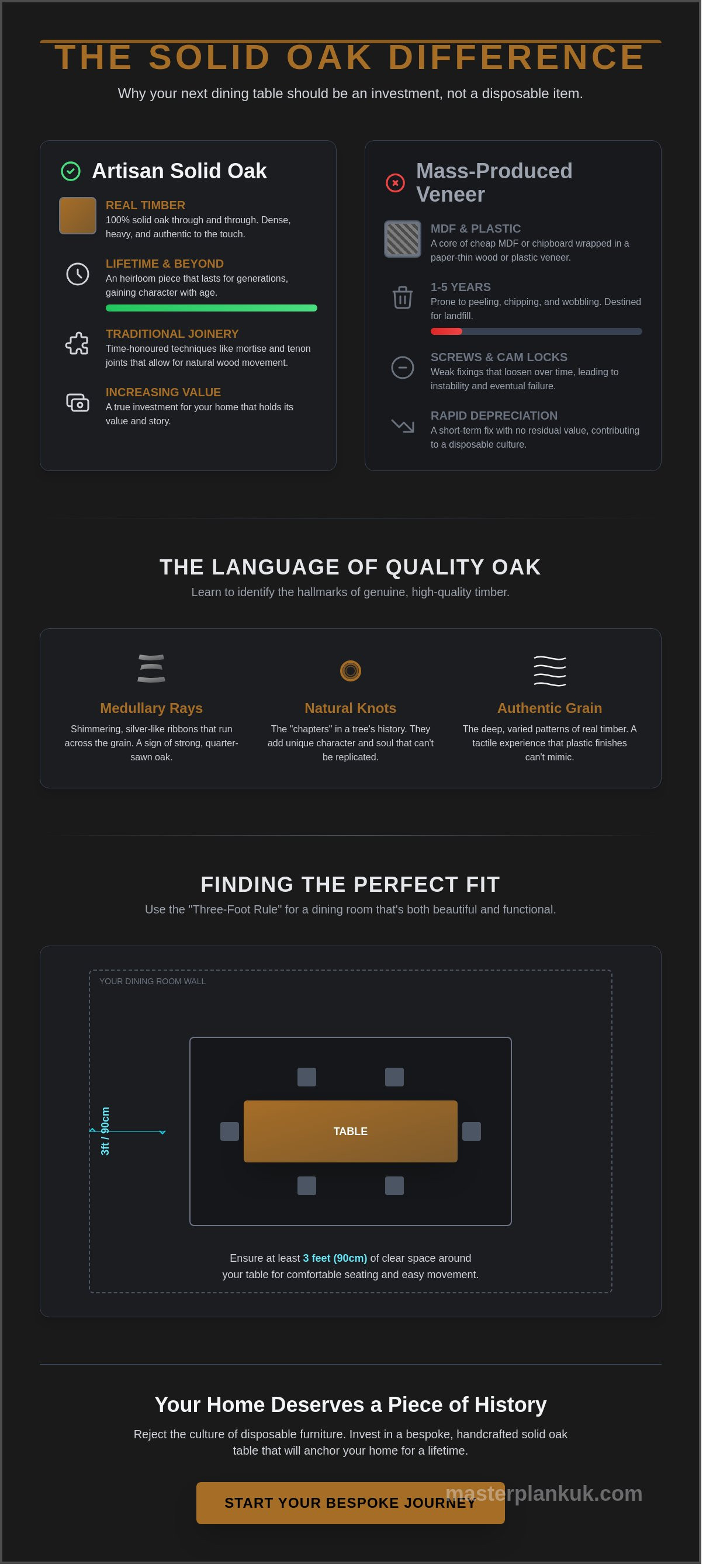
Flat-pack furniture relies on cam locks and staples that inevitably loosen over time. This creates the wobble many of us know too well. In contrast, furniture that is handmade in the UK utilizes traditional joinery designed to last for generations. Choosing artisan-made pieces stops the disposable furniture cycle. It ensures that your table won't end up in a landfill after five years of use. Quality control is personal when a craftsman signs off on their own work. There is a pride in the joinery that mass production simply cannot replicate.
Oak as a Sustainable Material
Sustainability is the heart of our craft. We source our timber from responsibly managed forests where growth outpaces harvesting. Consider the carbon footprint of your home. Imported furniture often travels over 10,000 miles from overseas factories before reaching a UK home. By choosing locally crafted timber, you significantly reduce transport emissions. Buying a high-quality table once is the ultimate eco-friendly choice. It's a rejection of the fast furniture culture that depletes global resources for short-term convenience. A solid oak table is a legacy piece, not a temporary fix.
Understanding Timber Quality: Grain, Character, and Craftsmanship
Oak speaks a language all its own. When you look closely at the surface of a high-quality oak table dining room centerpiece, you'll see medullary rays. These shimmering, silver ribbons run perpendicular to the grain. They're a hallmark of slow-grown, quarter-sawn timber and a sign of true structural integrity. Knots aren't flaws. They're chapters of a tree's history, marking where branches once reached for the sun. At Master Plank UK, we believe these features tell a story that mass-produced furniture simply can't replicate.
Choosing between character grade and prime oak defines your room's aesthetic. Prime oak is clean, uniform, and refined. Character grade is alive. It features swirls, pips, and varied tones that bring warmth to a space. We celebrate "imperfections" like original saw marks or tiny nail holes. These aren't defects; they're evidence of a previous life. In a world of clinical perfection, these rugged details add genuine value and soul to your home. The tactile experience matters just as much as the visual. A table should feel like earth and history under your fingertips, not like a cold sheet of plastic.
Traditional Joinery Techniques
We don't rely on cheap screws or modern brackets that fail over time. We use time-honoured methods because they work. Wood is a living material. It breathes. It expands during humid periods and contracts when heating systems are active during drier months. Our robust joinery, including deep mortise and tenon joints, allows for this natural movement. This precision prevents the timber from warping or splitting, ensuring your investment remains a family heirloom for decades. Every piece is handmade in the UK with a focus on longevity and structural honesty.
Finishing Touches: Oils, Waxes, and Natural Protection
Heavy lacquers often create a thick, artificial barrier that masks the wood's natural beauty. We prefer a different path. Our approach focuses on natural oil finishes that penetrate deep into the timber fibres. This method provides excellent spill resistance against a Sunday roast or a glass of wine while maintaining that sought-after "raw" look.
- Natural Oils: Enhances the golden hues and allows the grain to remain tactile.
- Hand-Applied Waxes: Provides a soft, matte sheen that develops a rich patina over the years.
- Breathability: Unlike plastic coatings, our finishes let the wood age gracefully without peeling or cracking.
We aim to bring out the soul of the timber, highlighting the unique weather-beaten textures that make your oak table dining room furniture a one-of-a-kind creation. It's about finding the perfect balance between rugged, rustic charm and the practical needs of a busy modern household.
Finding the Perfect Fit: A Guide to Shapes, Sizes, and Seating
Choosing the right scale for your oak table dining room involves more than just checking floor measurements. It's about the flow of the home and the comfort of your guests. We always advise following the three-foot rule. This means leaving at least 91cm of space between the edge of your table and the walls or other furniture. This gap allows people to pull back their chairs comfortably and walk behind seated guests without anyone feeling cramped. If you're working with a smaller Shrewsbury cottage, every centimetre counts towards that sense of airy, rustic charm.
Seating capacity is the next vital decision. A standard 150cm table typically sits four to six people, while a grand 240cm piece can accommodate eight to ten. For those who enjoy hosting large gatherings but want to keep their floor space clear during the week, Extending dining tables are an ideal solution. These bespoke pieces offer the versatility to transform from an intimate family setting to a 12-seater banquet hub. It's about having a piece of furniture that breathes with your lifestyle, expanding when the house is full and retracting when things quieten down.
Shape and Flow in the Dining Room
The shape of your timber defines the social energy of the room. A Solid Oak round table is a brilliant choice for smaller, square rooms or awkward nooks. It lacks sharp corners, making the space feel softer and more inviting. Round tables also encourage democratic conversation because everyone faces the centre. In contrast, a long rectangular farmhouse table has a commanding presence. It suits larger, formal dining rooms where the grain and character of the wood can truly stretch out. Pay attention to leg placement too. Tapered legs at the very corners maximise legroom, while a central pedestal allows for extra chairs to be squeezed in without anyone knocking their knees.
Mixing Seating: Chairs vs. Benches
You don't have to stick to a uniform set of chairs to create a beautiful aesthetic. In fact, a Rustic Bench is a fantastic space-saving tool. Benches can slide entirely under the table when they aren't in use, which opens up the walkway in narrower rooms. They also foster a relaxed, communal atmosphere that's perfect for big family breakfasts. Mixing and matching different seating styles adds a layer of curated history to your home. Try pairing your oak table with a bench on one side and a set of mismatched vintage chairs on the other. It celebrates the unique character of the wood and makes the furniture feel like it has its own story to tell.
Styling Your Space: Matching Your Oak Table to Your Interior Aesthetic
An oak table dining room serves as the anchor of your home's social life. It's the place where Sunday roasts meet school projects. Achieving the right look depends on how you balance the wood's natural warmth with your existing decor. For those leaning towards a Modern Farmhouse vibe, it's about creating an inviting heart. Think heavy, reclaimed planks that show off every knot and nail hole from their previous life. These imperfections aren't flaws; they're the soul of the piece.
If your taste is more Minimalist Scandi, focus on light-toned oak with clean, tapered lines. This aesthetic relies on simplicity to let the grain speak for itself. You can bridge the gap between traditional and contemporary styles by playing with texture. A smooth, planed tabletop paired with a rough-sawn bench creates a tactile contrast that feels both modern and grounded. Since the rise of the slow-furniture movement in early 2024, more homeowners are choosing these mixed textures to avoid a "flat" or mass-produced look in their homes.
The Industrial Dining Room
The raw, honest nature of an Industrial Desk often inspires the wider dining area. This look thrives on the marriage of solid oak and cold, architectural steel. To get this right, pair a chunky 50mm timber top with bold metal U-legs or X-frames. The steel provides a structural weight that complements the organic curves of the wood without stripping away its inherent warmth. It's a rugged, durable choice that suits the busy pace of a modern UK household.
Creating a Cohesive Look with Accessories
A table shouldn't stand alone. You can tie the whole room together by installing bespoke Wall Shelving crafted from the same batch of reclaimed timber. This creates a visual echo that makes the space feel intentional. Consider these elements to finish the room:
- Lighting: Warm-toned LED bulbs (around 2700K) highlight the golden hues of the oak grain.
- Textiles: Use natural linen runners or wool seat pads to soften the hard edges of the timber.
- Greenery: Real plants provide a vibrant contrast against the weathered textures of the wood.
Data from UK interior design reports in 2023 indicates that 64% of homeowners now prefer natural, sustainable materials over synthetic alternatives. Whether you prefer the sleek or the salvaged, your oak table dining room setup is the starting point for a home filled with character and British craftsmanship.
The Bespoke Journey: Why Handcrafted is the Logical Conclusion
Standard furniture sizes often struggle to accommodate the quirky architecture found across Shrewsbury and the wider UK. Whether you live in a timber-framed Tudor cottage or a high-ceilinged Victorian terrace, a factory-made piece rarely fits the soul of the room. Choosing a handcrafted oak table dining room centrepiece ensures that the furniture works for your home, rather than forcing your home to work around the furniture. We see bespoke design as the only way to truly honour the space you live in.
The journey begins with a simple sketch. We collaborate with you to define the exact dimensions that suit your lifestyle. You might need a specific height to accommodate heirloom chairs or a particular width to ensure guests can move freely during a Sunday roast. We offer complete control over timber thickness and leg styles, allowing you to choose between a chunky, rustic aesthetic or something more refined. Once the design is set, we select the timber, looking for the unique grain patterns and historical markers that give our wood its character. The process concludes with a hand-applied wax finish that protects the wood while highlighting its natural beauty. If you're ready to begin, you can learn more about commissioning your own bespoke dining table through our detailed guide.
The Value of the Maker’s Mark
There's a profound difference between buying a box from a warehouse and knowing the person who planed your tabletop. Every piece we create is handmade in the UK, carrying the story of the timber and the hands that shaped it. We celebrate the natural imperfections, the nail holes, the cracks, and the saw marks. These aren't flaws; they're the history of the wood. Many people assume bespoke is unaffordable, but by cutting out the middleman and building for longevity, a custom oak table dining room investment often provides better value than high-end retail brands that lack the same soul.
Preparing for Delivery and Installation
When your handcrafted table arrives, it's entering a new environment. Wood is a living material that breathes. It might take a few weeks to settle as it adjusts to the humidity and temperature of your home. To ensure it lasts a lifetime, follow these simple steps:
- Keep the table away from direct heat sources like radiators for the first fortnight.
- Use coasters and placemats to protect the wax finish from moisture and heat.
- Apply a fresh coat of high-quality furniture wax every six to twelve months to maintain the timber's lustre.
- Clean spills immediately with a soft, dry cloth; avoid harsh chemical cleaners that strip the natural oils.
Your table isn't just a piece of furniture. It's a future heirloom that will witness decades of family stories. By choosing handcrafted, you're choosing a piece of history that's built to stay.
Bringing Your 2026 Dining Vision to Life
Choosing a handcrafted oak table dining room centrepiece is a decision that looks far beyond 2026. You're investing in a piece of history that uses sustainable timber and traditional joinery to ensure it lasts for generations. From selecting the perfect grain character to finding a bespoke size that fits your specific floor plan, the journey of commissioning handmade furniture is deeply personal. Our master craftsmen in the UK take pride in every piece, ensuring that the natural imperfections of the wood become the highlights of your home.
A table is more than just a surface for meals; it's the heart of your household where stories are shared and traditions begin. By opting for British-made quality over mass production, you support a legacy of skill and environmental responsibility. We're ready to help you find that perfect balance of rustic charm and professional expertise. Every knot and saw mark tells a story of the wood's previous life, breathing soul into your living space.
Explore our collection of handcrafted Solid Oak Dining Tables and start your bespoke journey today. It's time to welcome a piece of furniture that truly belongs in your home.
Frequently Asked Questions
Is a solid oak dining table worth the investment compared to veneer?
Solid oak is a superior long-term investment because it can be sanded and refinished many times over decades. Veneer typically features a thin surface layer between 0.6mm and 3mm thick, which wears through or peels if damaged. A solid oak table dining room piece carries the weight and soul of the timber, lasting for generations rather than years.
How do I prevent my oak table from marking or staining?
Use coasters and heat mats for every item placed on the surface to create a physical barrier. Oak is a porous hardwood with a density of approximately 720kg per cubic metre, so liquids can seep into the grain if left sitting. Wipe spills within 30 seconds and use a high-quality hardwax oil to provide a protective, water-resistant seal.
Can I use an oak dining table in a room with underfloor heating?
You can use an oak table with underfloor heating if the timber is kiln-dried to a moisture content between 8% and 10%. Rapid temperature shifts cause wood to move. Keep your room at a steady 18 to 22 degrees Celsius to minimise natural expansion. This stability prevents the joints from opening or the wood from bowing over time.
What is the best way to clean a handcrafted wooden table daily?
Use a soft, lint-free cloth slightly dampened with warm water and a single drop of pH-neutral soap. Avoid harsh chemicals or spray polishes containing silicone, as these build up a sticky residue that dulls the finish. Dry the surface immediately with a second clean cloth. This simple routine preserves the natural lustre of the grain without stripping the protective oil.
How much space should I leave between the table and the dining room wall?
Leave at least 90cm of clearance between the table edge and the dining room wall. This allows 60cm for a guest to sit comfortably and an additional 30cm for someone to walk behind them. For a spacious feel in a Shrewsbury home, increasing this to 120cm ensures the room doesn't feel cramped during large family gatherings.
Do I need to re-oil my oak table, and how often?
Re-oil your table every 6 to 12 months depending on the frequency of use. You'll know it's time when water stops beading on the surface and the timber looks dull or "thirsty." Lightly sand the surface with 240-grit sandpaper before applying a fresh coat of hardwax oil to restore the deep, rustic character of the wood.
What is the difference between European Oak and American White Oak?
European Oak features a tighter grain and more character knots compared to the straighter, more uniform American White Oak. European trees often reach maturity after 100 to 150 years in managed forests, resulting in a more durable and storied timber. We prefer the rugged, weathered look of European oak for our bespoke builds because of its distinct personality and heritage.
Can I customise the leg style on a Masterplank UK oak table?
We offer complete customisation for your table legs, ranging from traditional chunky oak pillars to industrial steel X-frames. Each set is handcrafted in our UK workshop to match your specific dimensions. Whether you want a weathered farmhouse look or a sleek modern finish, we tailor the support to suit the unique soul of your chosen oak table dining room top.


