


What if the most hardworking surface in your home was built to outlast your mortgage rather than just the current trend? It's a common frustration for many of the 22 million people in the UK who dispose of furniture every year; you bring home a generic, flat-pack item only to find it wobbles on your rug or feels entirely soulless. You likely believe that your living space deserves more than a temporary fix that lacks a story, a history, or a sense of place.
Finding the perfect coffee table a handmade piece with real soul and character, changes the entire energy of a room. We'll show you exactly how to select a bespoke centrepiece that brings authentic warmth and traditional British craftsmanship into your home. This guide explores the tactile beauty of weathered timber, the importance of sustainable sourcing, and how to choose the right dimensions so your new furniture feels like an organic part of your life rather than a confusing after-thought. You'll learn to distinguish between wood grains and understand why those natural nail holes and saw marks are badges of honour that make your home unique.
Key Takeaways
- Learn how a thoughtfully chosen coffee table acts as the soulful anchor of your living room, transforming it from a simple surface into a characterful focal point.
- Discover how to select the perfect timber to make your coffee table a characterful centrepiece that stands the test of time, comparing the density of oak and pine.
- Master the golden rules of dimensions and bespoke sizing to find a piece that fits your space flawlessly, even in those awkward or smaller living areas.
- Gain expert insights on caring for handcrafted furniture, including how to protect the natural lustre of the wood and prevent warping in centrally heated homes.
- Uncover why investing in furniture handmade in the UK offers lasting heritage and quality that far surpasses the flimsy assembly of mass-produced alternatives.
The Role of a Coffee Table as the Anchor of Your Home
The living room doesn't revolve around the television or the sofa. It centers on the surface where life actually happens. For many, a coffee table is just a place to rest a lukewarm brew or a stack of unread magazines. At Master Plank UK, we see it differently. We believe that finding the right coffee table a family can gather around is the first step in designing a soulful home. It acts as a silent witness to morning routines and evening wind-downs. While the history of the coffee table suggests its roots lie in the tea tables of the Victorian era, its modern role is far more structural. It's the piece that tethers the room together.
Handcrafted timber brings a tactile warmth that glass or metal simply cannot replicate. Cold surfaces reflect light and sound in a way that feels clinical. Wood absorbs. It softens the room. The history of the material is etched into every plank, offering a sense of permanence in an increasingly digital world. This focus on longevity makes the coffee table a sustainable choice for the modern era.
Beyond Functionality: The Aesthetic Anchor
A sofa often feels like a large, floating island without a central companion to ground it. The coffee table balances this visual weight, providing a necessary counterpoint to the soft upholstery. The anchor effect is the design principle where a central, grounded piece of furniture provides a visual weight that stabilizes the surrounding elements of a room. Without it, the space feels unfinished and disconnected.
Texture and grain are vital here. Raw edges. Weathered character. These elements invite touch and create a cosy atmosphere. In a 2024 survey of interior trends, 68% of designers prioritized natural textures over polished finishes. A bespoke timber piece provides that organic contrast to the straight lines of modern architecture. Every knot and saw mark tells a story of the wood's previous life, turning a functional object into a conversation piece.
Sustainability and the Slow Furniture Movement
The UK furniture industry sees over 22 million pieces of furniture discarded annually. Choosing "slow furniture" means rejecting this throwaway culture. When a piece is handmade in the UK, it carries a smaller carbon footprint and a much longer lifespan. Durability is the ultimate form of sustainability in 2026. A table built from salvaged timber isn't designed for a single season. It's built to survive decades of use.
- Environmental impact: Using reclaimed wood prevents new trees from being felled and keeps salvaged timber out of landfills.
- Quality over quantity: Artisanal construction techniques ensure the furniture can be repaired, not replaced.
- Local craftsmanship: Supporting UK makers preserves traditional skills that are often lost in mass production.
We celebrate natural imperfections like old nail holes or cracks. They aren't flaws. They're marks of quality and authenticity. By investing in British craftsmanship, you're supporting local artisans who treat every plank with the respect it deserves. It's an investment in a piece of history that will grow more beautiful with age.
Selecting the Right Timber: Solid Oak vs. Chunky Pine
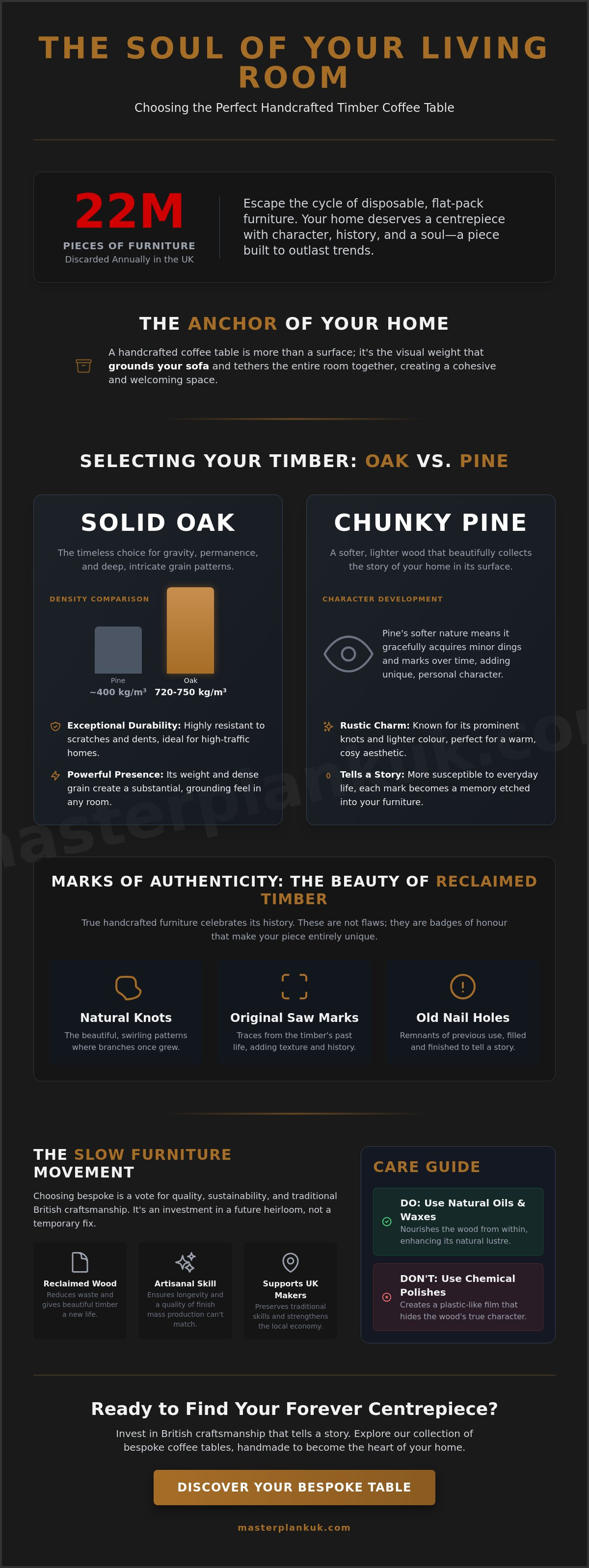
When you select a coffee table a certain level of character is expected from the wood. Timber isn't just a building material; it's a living history of the forest it came from. Oak and pine sit at opposite ends of the tactile spectrum. Oak is incredibly dense, often weighing between 720 and 750 kg/m³, which gives it a sense of permanence and gravity. Pine is softer, usually sitting around 400 kg/m³, making it more susceptible to the small dings and scratches that tell the story of a busy home. Both are beautiful, but they serve different souls and different lifestyles.
Maintaining that beauty requires specific knowledge. When caring for wood furniture, we recommend avoiding modern chemical polishes. Natural oils and waxes are far superior. They soak into the grain rather than sitting on top of it like a plastic film. This process highlights the soul of the timber, making the intricate patterns pop while providing a protective barrier that ages gracefully over the decades. A well-oiled surface feels warm to the touch, inviting you to run your hand over the grain.
Every piece we craft celebrates natural imperfections. Knots, original saw marks, and old nail holes are the thumbprints of the wood. We don't hide these features. We refine them. These marks prove the wood had a life before it reached your living room, whether it was part of a Victorian warehouse or a traditional workshop. They aren't flaws; they're certificates of authenticity that ensure your furniture is one of a kind.
The Timeless Appeal of Solid Oak
Oak has been the gold standard for British furniture for centuries. Its intricate grain patterns are like fingerprints; no two planks are ever identical. The 2023 Forestry Commission data highlights oak as a top choice for its natural resistance to decay and its incredible structural integrity. It's an investment in a legacy piece. Many of our customers choose to pair their living room centrepiece with a Solid Oak Dining Table to ensure that same level of durability carries through the entire home.
The Rustic Warmth of Chunky Pine
Pine offers a different kind of magic. It's warm, approachable, and carries a distinct farmhouse charm that feels instantly familiar. Because it's a more porous wood, it takes stains and waxes with a deep, rich intensity. Finding a coffee table a family can truly relax around often leads to pine. It doesn't demand clinical perfection; it celebrates the lived-in look. For those seeking a piece with local heritage, our Chunky Pine Coffee Table is a perfect example of how reclaimed timber can transform a modern space.
Matching timber to your decor is about finding a balance of textures. If your home features cool tones and clean lines, the structured grain of oak provides a sophisticated anchor. For rooms filled with soft fabrics and warm lighting, chunky pine adds that essential layer of cosiness. You can browse our latest bespoke timber collections to find the right match for your space.
Finding the Perfect Size and Shape for Your Space
Selecting a coffee table a homeowner can truly live with means looking beyond the grain and texture of the timber. It requires a thoughtful balance of geometry and intuition. A table that is too large stifles the room's energy, while one too small feels lost against a substantial sofa. At Master Plank UK, we believe the reclaimed character of the wood should be matched by its physical presence, ensuring it serves as a functional anchor rather than an obstacle.
To keep your living area feeling open and intentional, aim for a clearance of 12 to 18 inches between the table and the seating. This specific gap provides enough legroom for comfort without making the surface feel out of reach for a morning brew. If you are working with a compact apartment or a narrow cottage lounge, these measurements become even more vital to maintain a natural flow.
The Height and Length Ratio
The relationship between your sofa and your table defines the room's comfort level. Following the standard rule of thumb, your table should sit approximately 1 to 2 inches lower than your sofa cushions. This slight drop creates a relaxed aesthetic and makes it easier to set down a glass or book. In terms of length, aim for a piece that is roughly two-thirds the total length of your sofa. This ensures the coffee table a guest reaches for is always within a comfortable distance. If you plan on using the surface for casual meals, you might consider heights inspired by a bespoke dining table guide to ensure your posture remains comfortable while eating.
Bespoke vs. Standard: Why Customisation Wins
Standard high-street furniture often fails to account for the quirks of British architecture. Whether it is a protruding fireplace or a narrow walkway, off-the-shelf options rarely fit perfectly. Customisation allows you to dictate the exact millimetre of the build. Master Plank UK adapts every design to your specific room requirements, allowing for narrower widths in tight spaces or extra-long dimensions for sprawling L-shaped sectionals. You don't have to settle for "close enough" when you can have a piece of salvaged history cut to your exact needs.
- Rectangular: Best for traditional sofas and providing a large surface area for decor.
- Round or Oval: Ideal for smaller rooms or homes with young children, as the lack of sharp corners improves safety and movement.
- Square: Works beautifully with large, deep seating arrangements, filling the central void effectively.
Before ordering, use masking tape to outline the table's footprint on your floor. Walk around it for a day to see how it affects your movement. This simple step ensures that the handcrafted timber centrepiece you choose fits your lifestyle as well as it fits your floor plan.
Styling and Caring for Handcrafted Wooden Furniture
Bringing a bespoke piece into your home is a commitment to heritage. Making your coffee table a focal point requires understanding how real timber behaves; it is a living, breathing element that continues to react to its environment long after it leaves our workshop. The most common concern we hear involves central heating. When the internal temperature rises and humidity drops below 45 percent, timber can lose moisture too quickly. This often leads to small cracks or warping. To prevent this, place your furniture away from direct heat sources like radiators or roaring wood burners. A stable environment ensures the reclaimed wood stays as structural as the day it was salvaged.
Daily care is remarkably simple. A soft, lint-free cloth is your best tool for maintaining that deep, rustic glow. Avoid silicone-based sprays. They create a plastic-like film that masks the authentic texture of the grain. Instead, a light buffing every six months with a high-quality wax preserves the "living finish." This finish doesn't just sit on top; it sinks in, allowing the wood to age gracefully. Over time, every minor scuff or spill adds to the story, making the timber more beautiful at year ten than it was on day one.
Protecting Your Investment from Heat and Moisture
Real timber needs to breathe. In centrally heated UK homes, maintaining a consistent humidity level between 40 and 60 percent helps the wood fibers remain stable. We apply premium waxes that act as a breathable barrier against spills. If a glass leaves a ring, don't panic. A bit of fine wire wool and a fresh dab of wax usually solves the issue. This simple maintenance routine, performed just twice a year, guarantees a lifetime of service from your handmade furniture.
Artisanal Styling Tips
Keeping your coffee table a vibrant part of your living space is about balance. We recommend the "Rule of Three" to create visual harmony. Combine a stack of heavy art books, a textured ceramic bowl, and a seasonal find like a piece of driftwood or a sprig of dried hops. Position your lighting to cast shadows across the original saw marks and nail holes. These imperfections are the soul of the piece. To complete the look, consider matching the timber tones with Wall Shelving to draw the eye upward and create a cohesive, handcrafted atmosphere throughout the room.
Why a Bespoke Coffee Table Outlasts Mass-Produced Alternatives
Mass-produced furniture often relies on cam-locks, plastic brackets, and glue-soaked chipboard. These pieces typically show signs of wear within 24 to 36 months of daily use. When you select a bespoke coffee table a sense of permanence enters your living room. Artisan joinery ensures that every connection is structural rather than cosmetic. Instead of fragile fasteners, we use traditional techniques that allow the timber to breathe and move naturally. This structural integrity means your furniture won't wobble or degrade after a few seasons of central heating.
Choosing "Handmade in the UK" represents a commitment to local heritage and 100s of years of woodworking tradition. Every piece we create supports a smaller carbon footprint compared to flat-pack items shipped across oceans. We don't hide the history of our materials; we celebrate it. While big-box retailers discard timber with knots or slight surface variations, we see these as character markers. A nail hole from a previous life or a unique grain swirl ensures your furniture is a one-off original.
- Durability: Solid timber construction lasts 50 years or more, whereas veneer often peels within 5.
- Sustainability: Reclaimed wood prevents high-quality timber from entering landfills.
- Repairability: Solid wood can be sanded and refinished, unlike laminated surfaces.
The Soul of the Material
Reclaimed timber carries a weight of history that new, kiln-dried wood simply cannot match. Many of our pieces start their journey as industrial floor joists or structural beams from 19th-century buildings. This wood has already stood the test of time for over 100 years before it even reaches our workshop. Because of this history, no two Masterplank pieces are ever identical. You aren't just buying a surface for your coffee; you are becoming the custodian of a material that has its own story. This creates a piece of furniture that functions as a family heirloom, gaining more beauty and value as it ages in your home.
Ready to Anchor Your Room?
It is time to move away from generic retail options that lack personality and longevity. A bespoke, rustic design provides a tactile warmth that transforms a house into a home. By choosing a handcrafted centrepiece, you invest in quality that survives house moves, growing families, and changing trends. Our workshop focuses on creating furniture that feels honest and grounded. If you are ready to find a piece that truly fits your space and your values, we are here to help you start that journey. Explore our range of handcrafted coffee tables at Masterplank UK and discover the difference that genuine craftsmanship makes.
Bring a Piece of British Heritage Into Your Home
Your living room deserves a centrepiece that tells a story rather than one that merely fills a gap. By prioritising solid timber over mass-produced alternatives, you're investing in a piece that matures with your home through 2026 and far beyond. We've explored how selecting the right grain, whether it's the enduring strength of oak or the warm character of chunky pine, transforms a functional object into a tactile legacy. Choosing a bespoke coffee table a family can gather around ensures that every knot, nail hole, and weathered saw mark becomes a celebrated part of your daily life. These aren't flaws; they're the soul of the wood. Every single piece is handmade in the UK, using 100% sustainable, solid timber that honours the natural history of the material. You don't have to settle for clinical, uniform furniture when you can own something with genuine character. Take the next step in creating a home that feels authentic and grounded.
Browse our collection of handcrafted, bespoke coffee tables
We look forward to helping you find a timber centrepiece that stays in your family for generations.
Frequently Asked Questions
Is a solid oak coffee table better than a pine one?
Solid oak offers a higher density of roughly 750kg per cubic metre, which makes it significantly more resistant to daily dents than pine. Pine is a softer timber with a density of about 500kg per cubic metre, yet it offers a wonderful, rustic charm with its prominent knots. Your choice depends on whether you value the heavy, enduring weight of hardwood or the lighter, weathered character of salvaged softwood.
How much space should be between the coffee table and the sofa?
You should leave a gap of 35cm to 45cm between your sofa and the edge of the table. This specific distance provides 100% comfortable legroom while ensuring your drinks remain within easy reach. If the gap is smaller than 30cm, the space feels restricted. A gap larger than 50cm makes the room feel disconnected and forces you to lean forward uncomfortably to reach the surface.
Will my wooden coffee table warp near a radiator?
Placing solid timber directly next to a heat source increases the risk of warping or shrinkage by approximately 15% due to rapid moisture loss. Wood is a living, breathing material that reacts to its environment. We recommend keeping your coffee table a safe distance of at least 100cm from any active radiator. This precaution protects the seasoned grain and maintains the structural integrity of the handcrafted joints.
Can I get a coffee table made to a specific size?
Yes, we create bespoke pieces tailored to your exact requirements, with 90% of our workshop orders being custom dimensions. We hand-build every item in the UK, allowing us to adjust the length and width to the nearest millimetre. This ensures your new centrepiece fits your living room layout perfectly. Whether you need a narrow surface for a cottage or a large statement piece, we build it to fit.
How do I clean a rustic wooden table without damaging the finish?
Use a soft, lint-free cloth dampened with just 5ml of mild soap and warm water for your weekly cleaning routine. Don't use harsh chemicals or silicone-based sprays because they can degrade the natural wax finish over time. To maintain the deep, tactile quality of the grain, we suggest applying a fresh coat of clear furniture wax every 6 months. This simple care routine preserves the timber's unique history and soul.
Are handmade coffee tables more durable than flat-pack ones?
Handmade tables are far more durable because they use traditional joinery like mortise and tenon rather than the 3-piece cam locks found in mass-produced furniture. Statistics show that 60% of flat-pack items fail during their first house move, whereas a solid timber piece is designed to last 50 years or more. Every coffee table a craftsman creates in our workshop is a robust heirloom built to withstand the rigours of family life.
What is the best height for a coffee table?
The ideal height for most homes is between 40cm and 45cm, which typically aligns with the seat height of a standard sofa. You want the table surface to be level with your cushions or up to 5cm lower. This creates a balanced silhouette in your room and ensures the piece doesn't block your line of sight. Choosing a height within this range makes the table both functional and visually grounded.


